
Where Americans Actually Thrive in Europe (and Where They Don't)
The 2026 map: ten places Americans are happy, the dream cities that disappoint, and how to tell which one is for you.

At least 180,000 Americans left the US in 2025.
But most picked probably picked their European city from YouTube videos or old travel guides.
As an Italian, I’ve watched this wave for years. I talk to them every week. I have American friends in Lisbon, Italy, and France and many are thriving.
But the reality is that most move back within 2 years, tens of thousands of dollars lighter.
Why is this scenario so common?
Firstly, there’s no such thing as “the American abroad.” A Californian and a New Yorker couldn’t be more different – they often want complete opposite things. A retiree, a founder, a tax-sensitive family, a remote worker, each one needs a different country.
There’s no best city in Europe. There’s the one that fits you.
And the places everyone dreams about sit near the bottom for real expat happiness. The winners are the places most people never look at.
So here’s the map. 10 places where Americans actually thrive, and the traps. Each tagged with who it’s for.
The six factors that decided this list
None of them are visible in the photos.
The tax treaty. The US taxes you forever, so the treaty you live under matters more than the rent. Some protect your Social Security, 401(k), even Roth. Some shred them.
Where your money comes from. Dollars earned and euros spent is the winning formula. A local paycheck is the one that breaks everything.
A visa that keeps renewing. Several trendy nomad visas are dead ends by design, with no road to staying.
The language. English buys you a visa and a coffee, but not day-to-day life. The countries sold as “everyone speaks English” (the Netherlands, the Nordics) are often the loneliest, because the locals just switch to English and you never break into their world.
The bill that follows you home. Medicare stops at the border, your US tax obligations never do, and some banks will drop you for being American.
A community that’s still there in February, not just July.
The weights shift with who you are. A retiree might have dealbreakers on the treaty and the winter community. A founder on income and the visa. A family on language and community.
So I’ve tagged each place below with who it’s for. Every pick scores on these six. Every trap fails at least two.
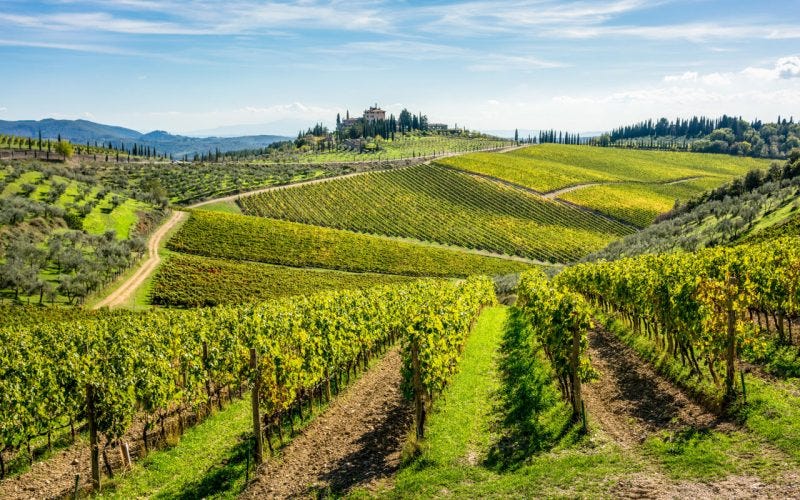
1. Lyon, Toulouse, Montpellier – France’s second cities 🇫🇷
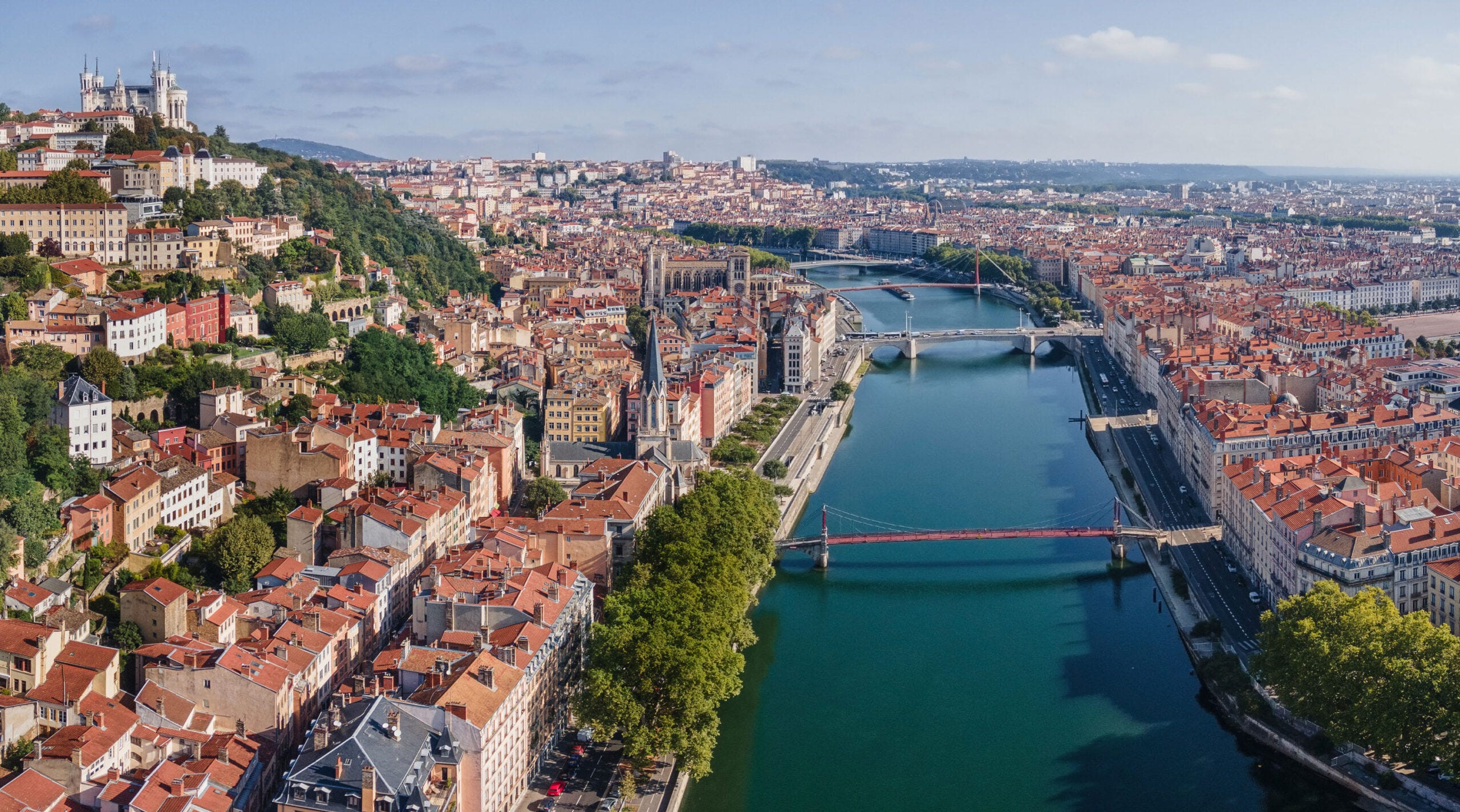
Best for: retirees and asset-heavy Americans who want Europe’s best tax treaty.
A 1BR runs €700–1,100/mo across the three. The long-stay visitor visa needs about €1,450/mo of income, no job required. Flights from LYS, TLS, or MPL.
What almost nobody mentions: for Americans, the US-France tax treaty is the best one there is. Your Social Security, your 401(k) and IRA withdrawals, even your Roth, taxed by the US and left alone by France. The Roth keeps its tax-free status, which almost nowhere else honors. You file in France, you pay in the US, done. France doesn’t tax wealth held as savings or investments at all, only real estate over €1.3M, and even then new arrivals get a 5-year pass on property they own abroad. So you can sit in Lyon paying American tax rates, with French healthcare and a fast train to anywhere.
Here’s the signal I’d watch. Even the French are moving back, especially to the south. I see it all the time. You don’t go there for culture or career, you go for the daily life, and down there the daily life is absurdly good. Montpellier hands you one of Europe’s largest car-free old towns with the Mediterranean fifteen minutes out. Lyon is the food capital of the country, the bouchons (its classic little bistros), the Paul Bocuse market. Toulouse does golden hour on the banks of the Garonne with a bottle of wine going round.
Everyone I know who’s made the move is happier for it. When the locals are choosing it on purpose, it’s worth paying attention.
The catch is the French – not the people but the language. You have to learn it, and outside the big international employers nobody switches to English for you. And they will readily correct your poor French.
One more thing: from 2026, visitor-visa holders pay a new health contribution, roughly €300–600 a year before public cover kicks in (the decree isn’t final yet).
Paris I left off on purpose. More on that later.
2. Valencia 🇪🇸
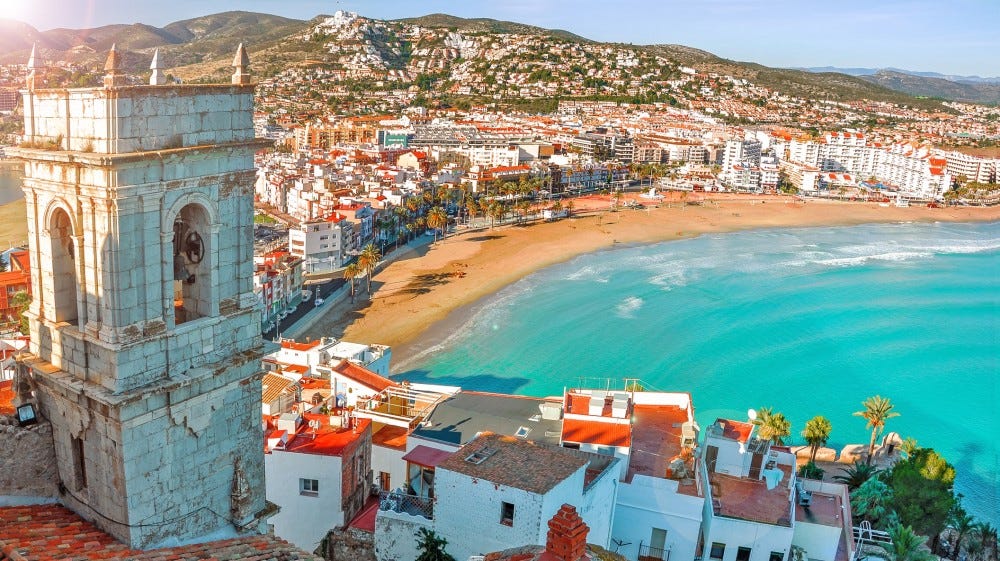
Best for: remote workers who rent and keep their money simple.
A 1BR runs around €1,000–1,400/mo. The nomad visa wants ~€2,850/mo of income; the passive-income visa ~€2,400/mo. Flights out of VLC.
Valencia is notoriously one of the best cities anywhere for expats, and I completely get why. Walkable, Mediterranean, real food, a beach in the city, and still affordable. Picture an ordinary Tuesday: you bike the whole length of the city on flat, dedicated lanes through a 9km green park that sits where a river used to run, almost all the way to the sea. Coffee in Ruzafa, the painted fishermen’s houses of El Cabanyal by the sand, paella for Sunday lunch in the city that invented it. That’s not an American thing, people from everywhere thrive here, but for an American it’s an unusually easy landing. The ones who do well are remote workers and early retirees who rent. The ones who struggle arrive needing a Spanish paycheck, and that’s the trap.
Valencia is easy to land in, there’s a real expat scene, but skip the Spanish and a few years later you’re still just a tourist with a lease.
The fine print is where you need to take notice, and for Americans with assets it’s the worst on this list. Spain doesn’t honor the Roth. There’s a regional wealth tax (Madrid and Andalusia waive theirs, Valencia doesn’t), plus a yearly form that makes you declare everything you own over €50K anywhere in the world. Rent, keep your money simple, and it might be the best city life in Europe for the money.
3. Málaga 🇪🇸
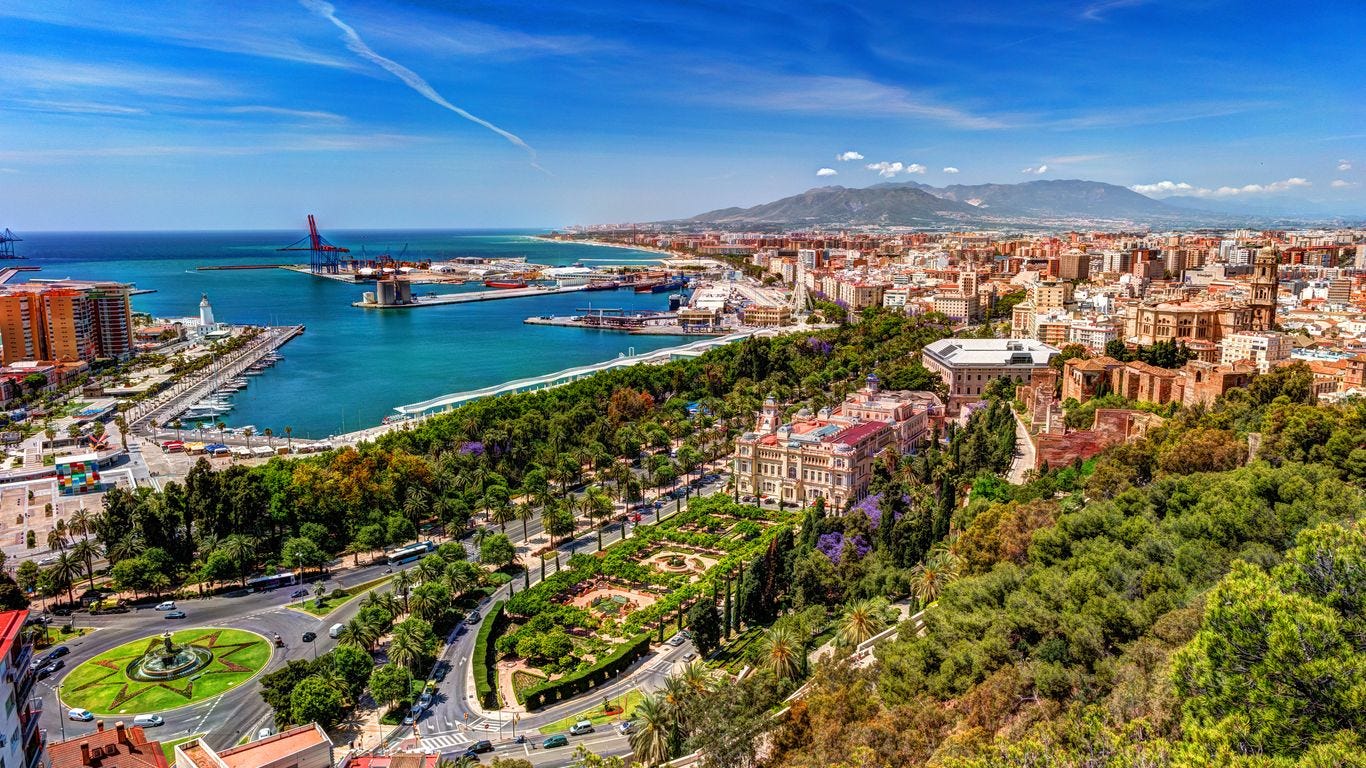
Best for: remote workers and retirees who want sun and a kinder tax bill.
A 1BR runs €700–1,100/mo. Same Spanish visa menu as Valencia. Flights from AGP, a proper hub.
The expats here are happy, consistently so, and the word that keeps coming up about Málaga is very positive. People say they felt at home within weeks. That’s what matters most, because what sinks most moves isn’t tax or weather, it’s never feeling at home. And the lifestyle is easy to love: sardines grilled over a wood fire right on the beach, a downtown reborn around art and museums, that clear southern light 300 days a year. Málaga is also in Andalusia, which scraps its wealth tax entirely. Same sun as Valencia, but a kinder tax bill.
The price: rents are up double digits a year, August is brutally hot, and the city works better than its infrastructure scores. One thing about that friendliness, it rewards effort. The warmth is real, but the Spanish you bring is what turns it into real friends instead of small talk. (Alicante, just up the coast, is one of the few spots left where housing is still both cheap and easy to find.)
Quick pause…
Most people asking me about Europe are Americans planning an EU move.
The city and the house are often the easier part of the process. The legal architecture is what people get wrong: residency, visa, tax position. In the wrong order, the dream gets expensive.
I'm hosting a webinar on Thursday, 25th breaking down the top EU Golden Visas: which programs are still open in 2026, what they actually cost, and how a rural base fits into the structure.
Full Q&A.
REGISTER HERE
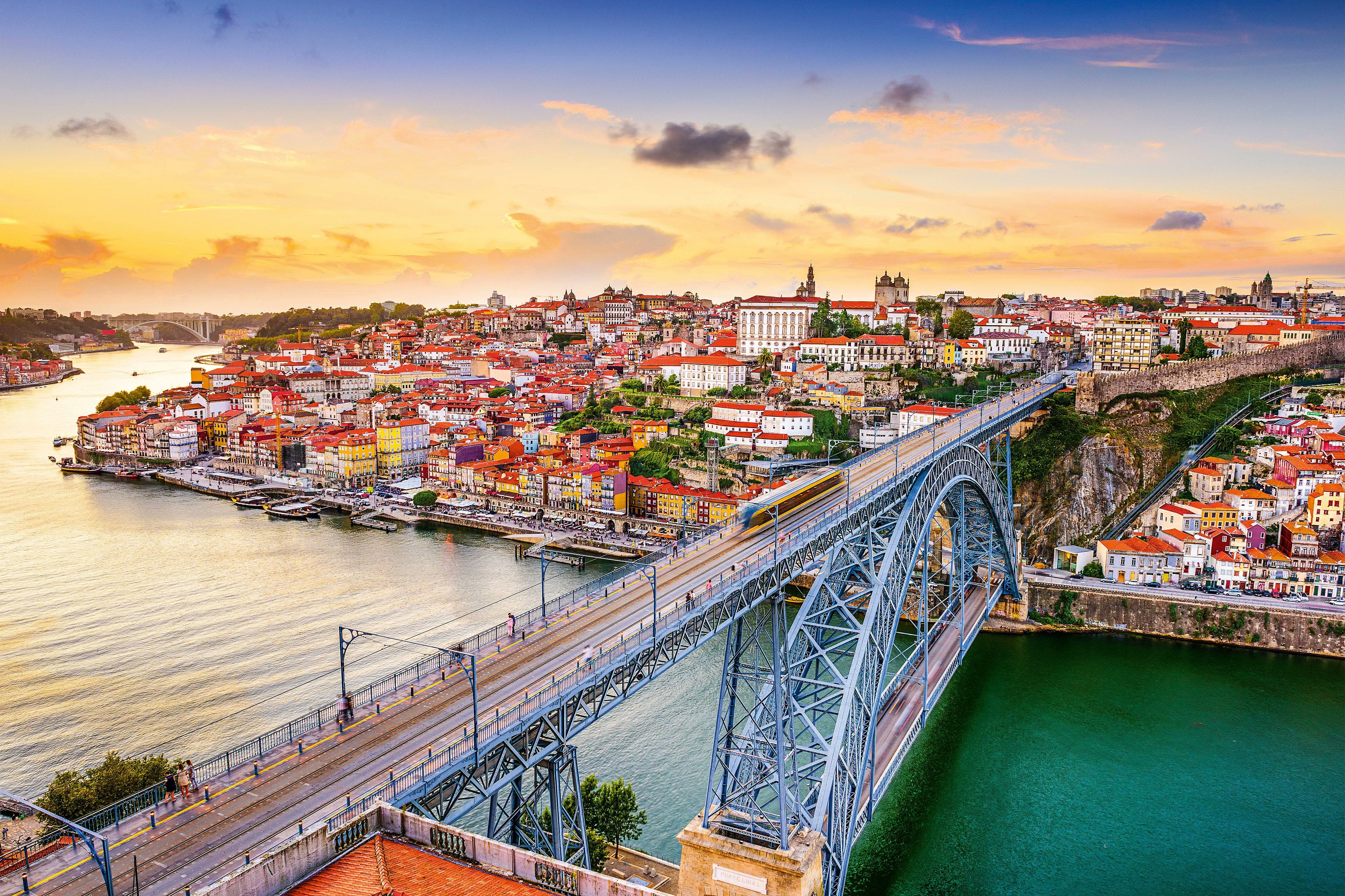
4. Braga, Porto, and the coast nearby 🇵🇹
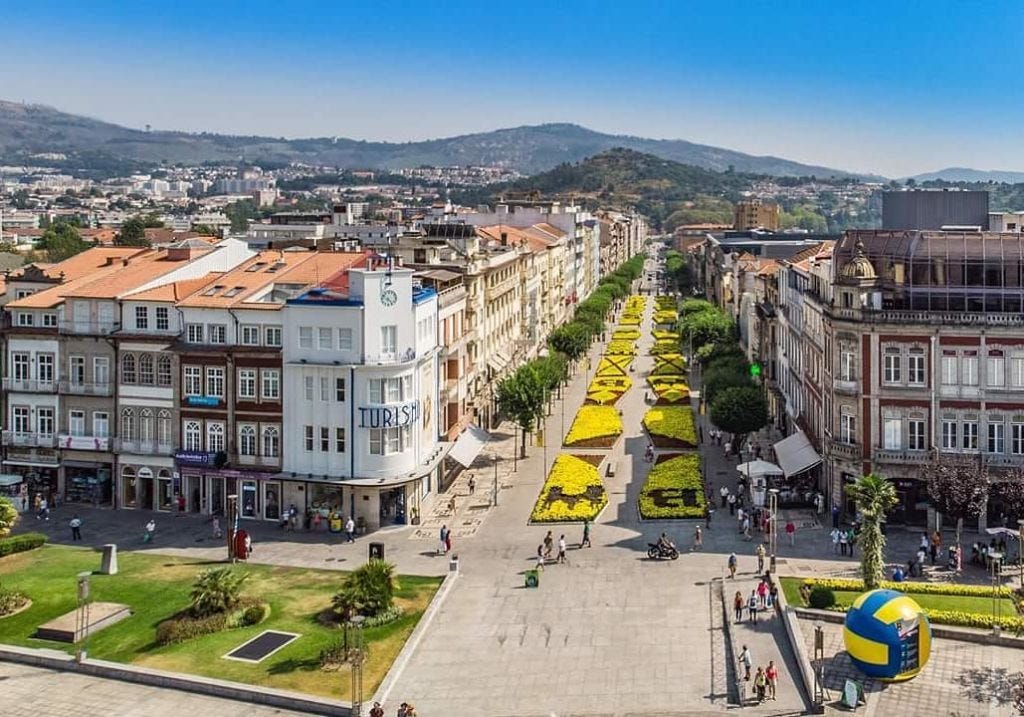
Best for: remote workers who want real Portugal, not Lisbon prices.
A 1BR runs €600–800/mo in Braga, €1,000–1,300 in Porto. Two easy visas, one for passive income, one for remote work. Flights from OPO.
I know this corner well. I’ve got friends from Braga, we run an office in Porto so I’m up there often, and the Americans I know based around the city are happy.
Porto is a different animal from Lisbon. Smaller, colder, more authentic. The food is incredible and the architecture is better, no contest. The only knock is that it’s small, which is exactly why the move is Braga, Porto, and the coast around it. Matosinhos and Foz are the secret: a working fish market that sells the morning’s catch at the port, and you eat it grilled twenty steps from the water. Ten minutes from the center, all the ocean and room to breathe the old streets don’t have. Braga is the quieter pick, a young university town with rents that never went insane. Porto speaks decent English, Braga less but that’s the price of a place that’s still properly Portuguese.
One myth to kill: people will tell you Portugal died as a destination when its big tax break for foreigners ended in 2025. For Americans that misses the point, the break was never really yours, since the US taxes you wherever you sit. So come for the life here, which is what should have brought you anyway.
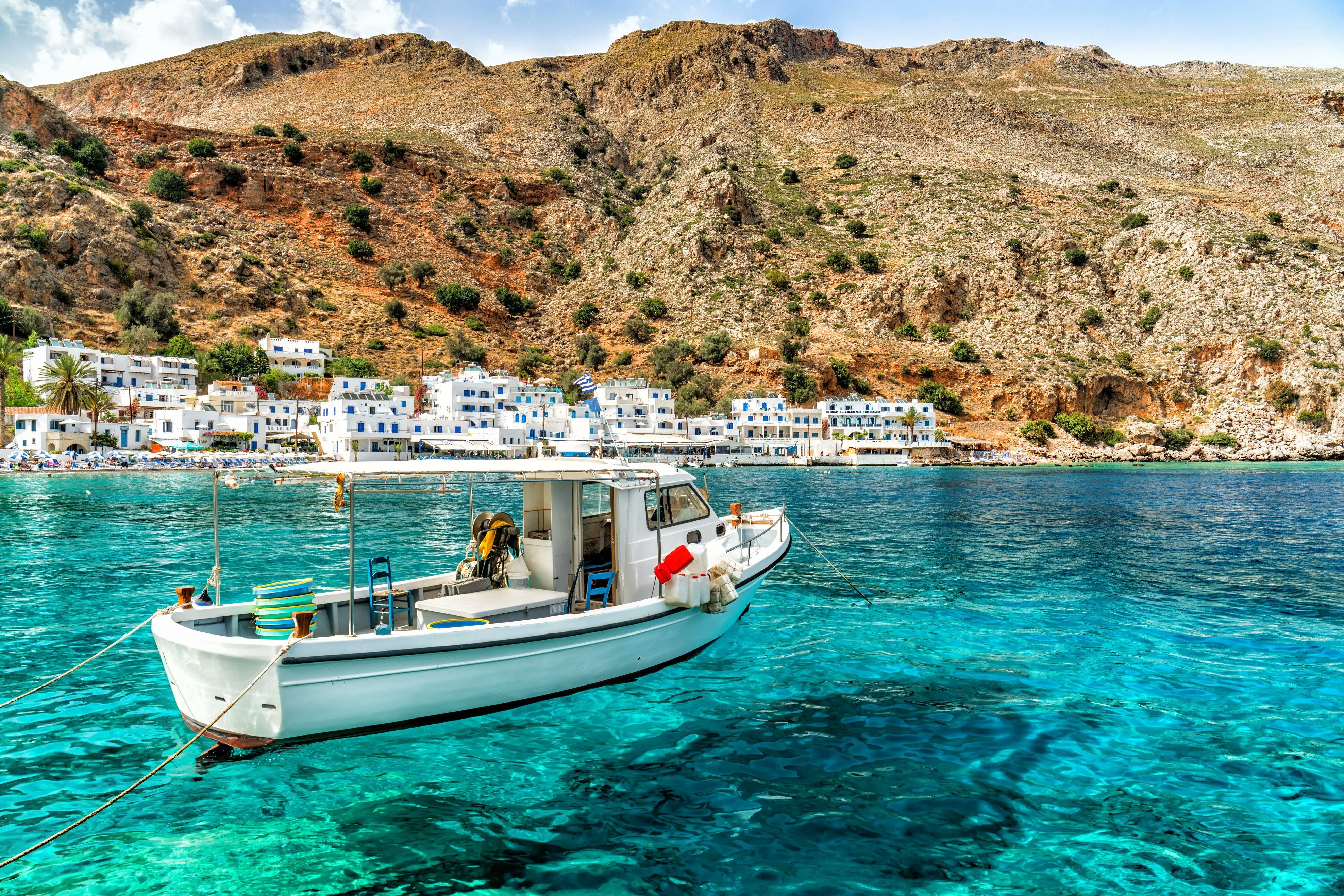
5. Crete: Chania, Rethymno, Heraklion, Agios Nikolaos 🇬🇷
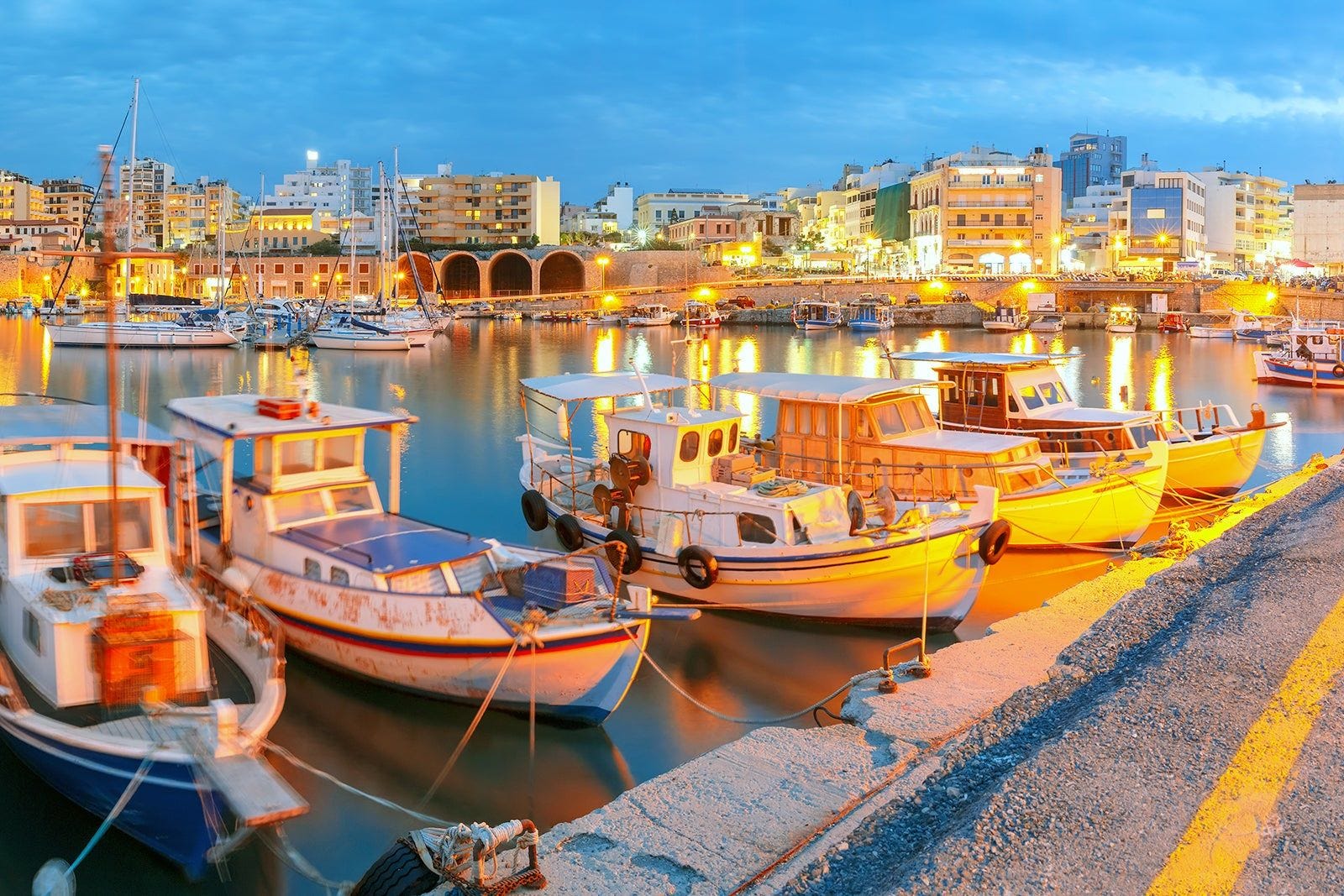
Best for: retirees who want a 15-year flat tax and a community already there.
A 1BR runs €500–900/mo. The nomad visa wants €3,500/mo and now comes as a 3-year permit (since 2026 you apply from a consulate, not in-country). Flights from CHQ or HER.
Greece built the best retiree deal in the Mediterranean and barely told anyone. The life is the real sell. The Cretan table is one of the healthiest on Earth, the harbor tavernas pour you a free raki at the end of the meal, and a long lunch of dakos and grilled fish runs about €15 a head. The 7% flat tax for foreign pensioners runs 15 years, where Italy’s runs 10.
And you’re not stuck with one town. Chania is the looker, with that Venetian harbor, and it has something you can’t buy your way into: an American community that goes back decades, long before the 2021 rush, partly because the US Navy has sat at Souda Bay since 1969. Rethymno is the smaller university town between the two airports. Heraklion is the capital, the practical one for hospitals, flights and real services. Agios Nikolaos out east is the quiet, resort-paced option. Same deal, four different speeds.
On the tax: for Americans the 7% isn’t really 7%, since the US taxes you first and you pay whichever is higher, but it wipes out the Greek progressive rates, which is the point.
What you sign up for: the bureaucracy is as bad as Italy’s, and the Greek alphabet makes the language harder than Spanish or Italian to even start. Chania’s tourist English and old expat crowd soften the landing, but the paperwork is still in Greek. Public healthcare thins out once you leave the cities, so budget for private. And it’s an island. Wonderful for nine months, but lonely if your life is somewhere else.
6. Las Palmas, Canary Islands 🇪🇸
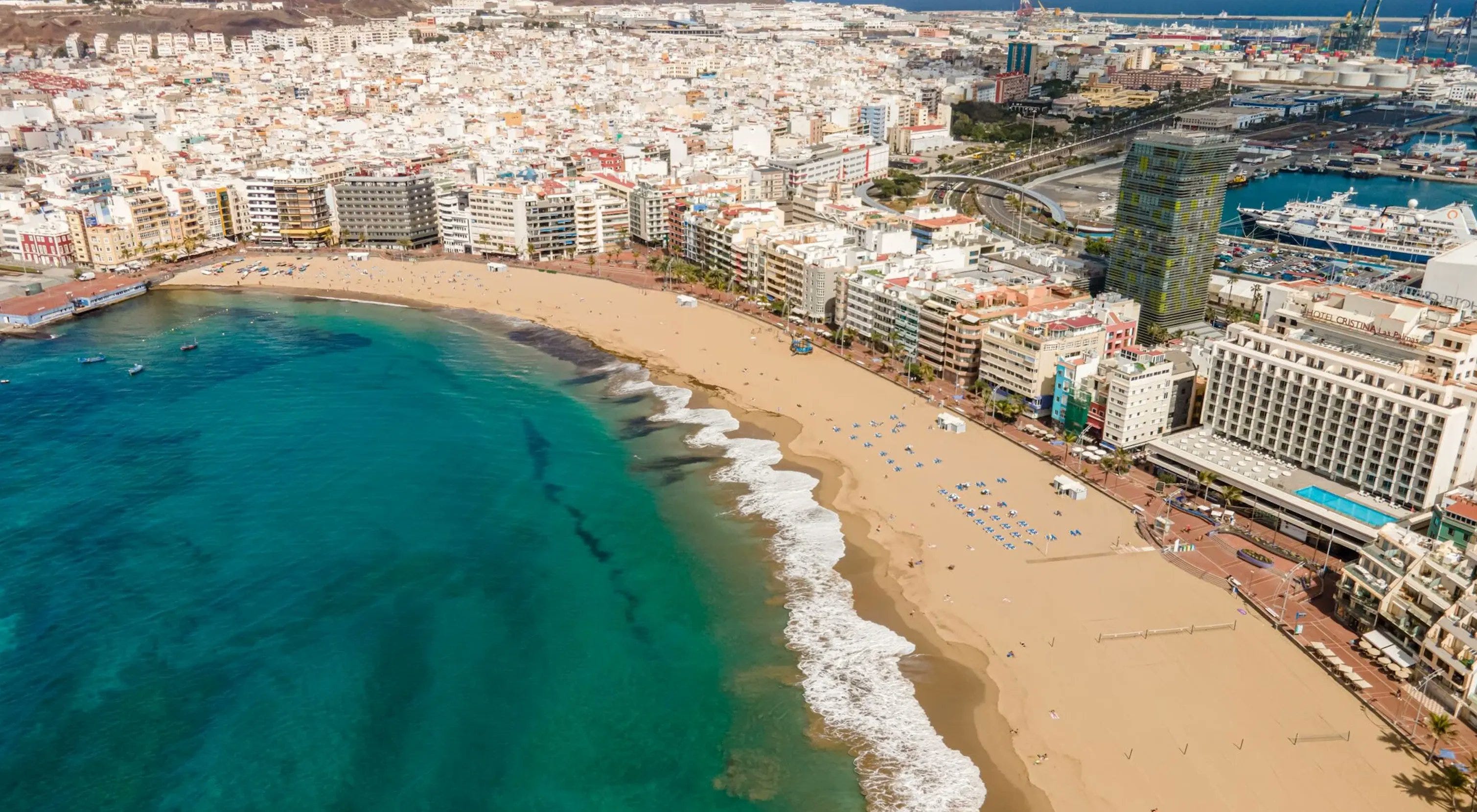
Best for: digital nomads chasing the best climate on Earth.
A 1BR runs €800–1,000/mo. Spain’s nomad visa renews up to five years and leads to permanent residence. Flights from LPA. All of Spain’s tax fine print applies.
I went deep on this in my weather thread recently, so the short version: Las Palmas has what’s often ranked the best year-round climate on Earth. A permanent, mild summer, 21°C in January, that never tips into intense heat. I have a friend there who’s never been happier, his normal morning is a surf before work. The city beach, Las Canteras, is three kilometres of golden sand warm enough to swim right through the winter. Add a dozen-plus coworking spaces, tapas in the cobbled old town of Vegueta, and rents well under Lisbon’s, and on weather alone it belongs near the top of this list. The visa goes somewhere too, so it’s a life, not just a winter escape.
The flip side: all of Spain’s fine print follows you here, the Roth problem and that worldwide asset-reporting form. And the nomad scene runs entirely in English, which makes it very easy to land and never once leave the bubble. The crowd is friendly but it churns, island fever is a real thing, and if your work needs people in a room rather than a laptop, you’ll feel how far out you are.
7. Prague and Brno 🇨🇿
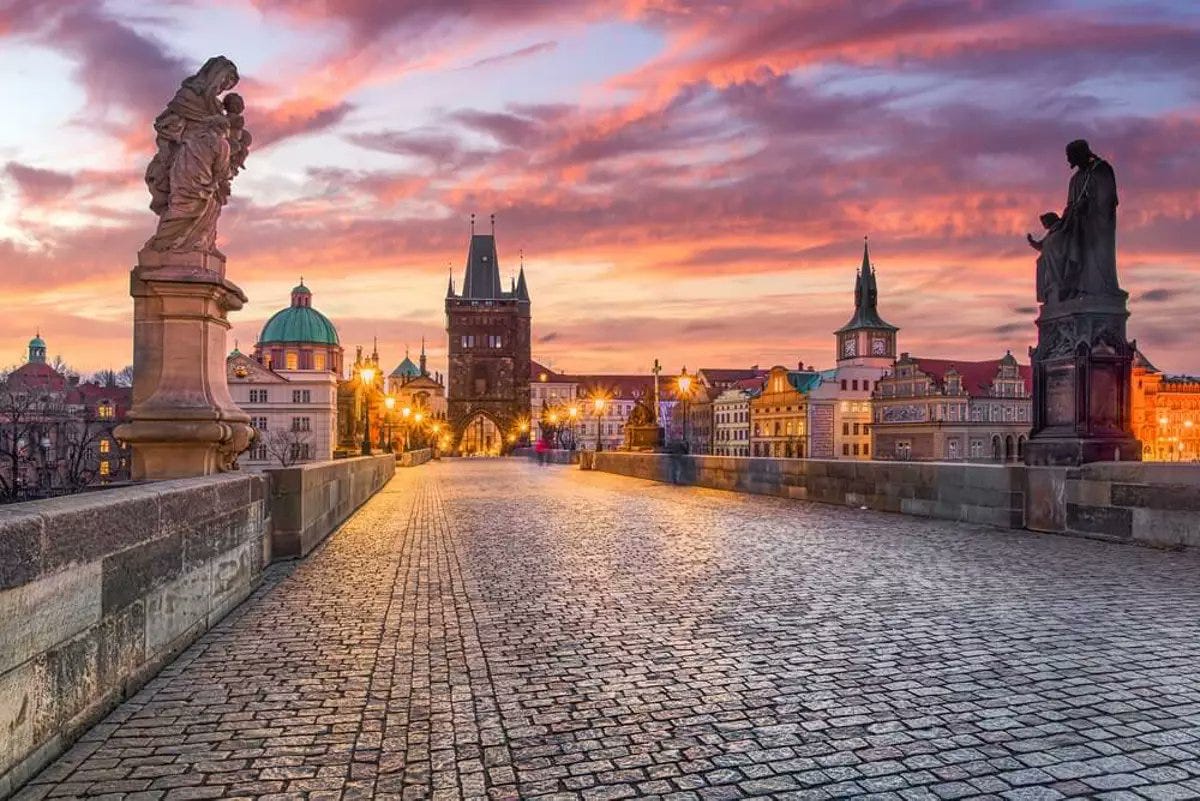
Best for: the self-employed and working-age. Not retirees.
A 1BR runs €800–1,200/mo in Prague, about 18% less in Brno. The živno freelance license is the way in: 12 months, then a 24-month extension. Flights from PRG.
I was there last year and the food and the culture floored me. A world-class pint for a couple of dollars, leafy Vinohrady wine bars, beer gardens all summer and Christmas markets in December, world-class transit for pocket change, and one of the safest, best-run cities anywhere.
Here’s my bet: Central and Eastern Europe is on the upswing, and I’d expect more Americans to choose it over the next few years. Prague has the head start. Americans have been coming since the early 90s, so the history is already in place, schools, institutions, a network that doesn’t reset every season. The živno freelance license is rare in Europe too: a real way in for someone self-employed. Brno is the cheaper version, a proper tech and student town for about 18% less.
The catch: this one’s for working age. If you’re employed or on a živno you get public health insurance, but a non-working retiree is stuck buying private cover that gets expensive and hard to find past 65. Prague runs fine in English day to day; the paperwork and most of Brno don’t. Czech is hard, and people stay a bit reserved until you try. And the winters are long and grey.
8. Italy’s 7% towns 🇮🇹
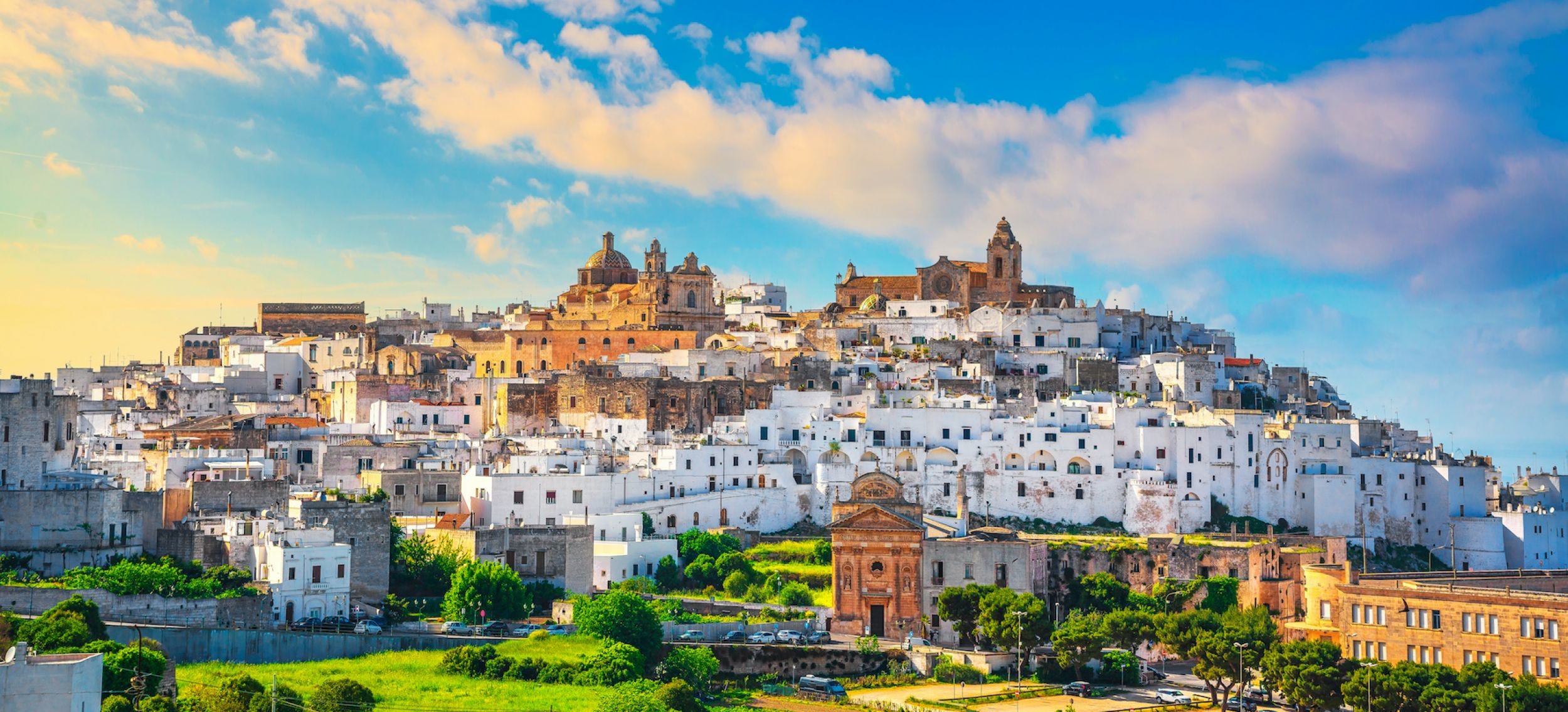
Best for: retirees on passive income ready to go all in.
Places run €500–1,000/mo, give or take the town. You come in on a residence visa for people living on passive income. Flights from Bari, Brindisi, Catania, or Cagliari.
This is a completely different gameplay from everything else on the list. I write about it often and did a full breakdown a while back, so here’s what matters. The rule is simple: the town has to have under 30,000 people on the day you move in. If it grows past that later, you’re already in. That opens up a lot of options, mostly in the south but also parts of central Italy. Real towns with hospitals and train stations: Ostuni’s white lanes above olive groves that run to the Adriatic, Roseto where the Adriatic beach and the Gran Sasso mountains are an hour apart, the Sardinian coast around Cagliari. Not photogenic empty villages. The food is orecchiette and burrata, dinner for two with wine runs about €25, and at dusk the whole town spills out to walk before dinner.
And these places want you, while Lisbon pushes people away, the south of Italy recruits. On the tax: the 7% isn’t 7% all-in for an American, since the US taxes you first and you pay the higher of the two. What it really buys is escape from Italy’s 23–43% rates, no Italian wealth tax on your foreign assets, and no asset reporting for ten years. The best thing Italy has ever offered a foreigner.
One thing people always ask: this is a small-town deal by design, under 30,000 people. Want a proper city instead? You give up the tax break, and that’s a fair trade. Rome is glorious but big and overwhelming for a lot of people. Turin is a smarter city pick, just don’t expect the 7%.
The price of all this: in a town this size almost no one speaks English, and Italian isn’t optional. It’s the deepest plunge on the list, which is both the appeal and the price. And one thing I’ll say to Americans especially: don’t land here and try to open an olive farm on day one. Learn first how complex Italy can be, keep your income abroad, give it time. Do that, and this might be the best version of the dream you can actually have. (The citizenship-by-descent shortcut, for what it’s worth, is gone, the 2025 law cut it to a parent or grandparent born in Italy.)
9. Cyprus 🇨🇾
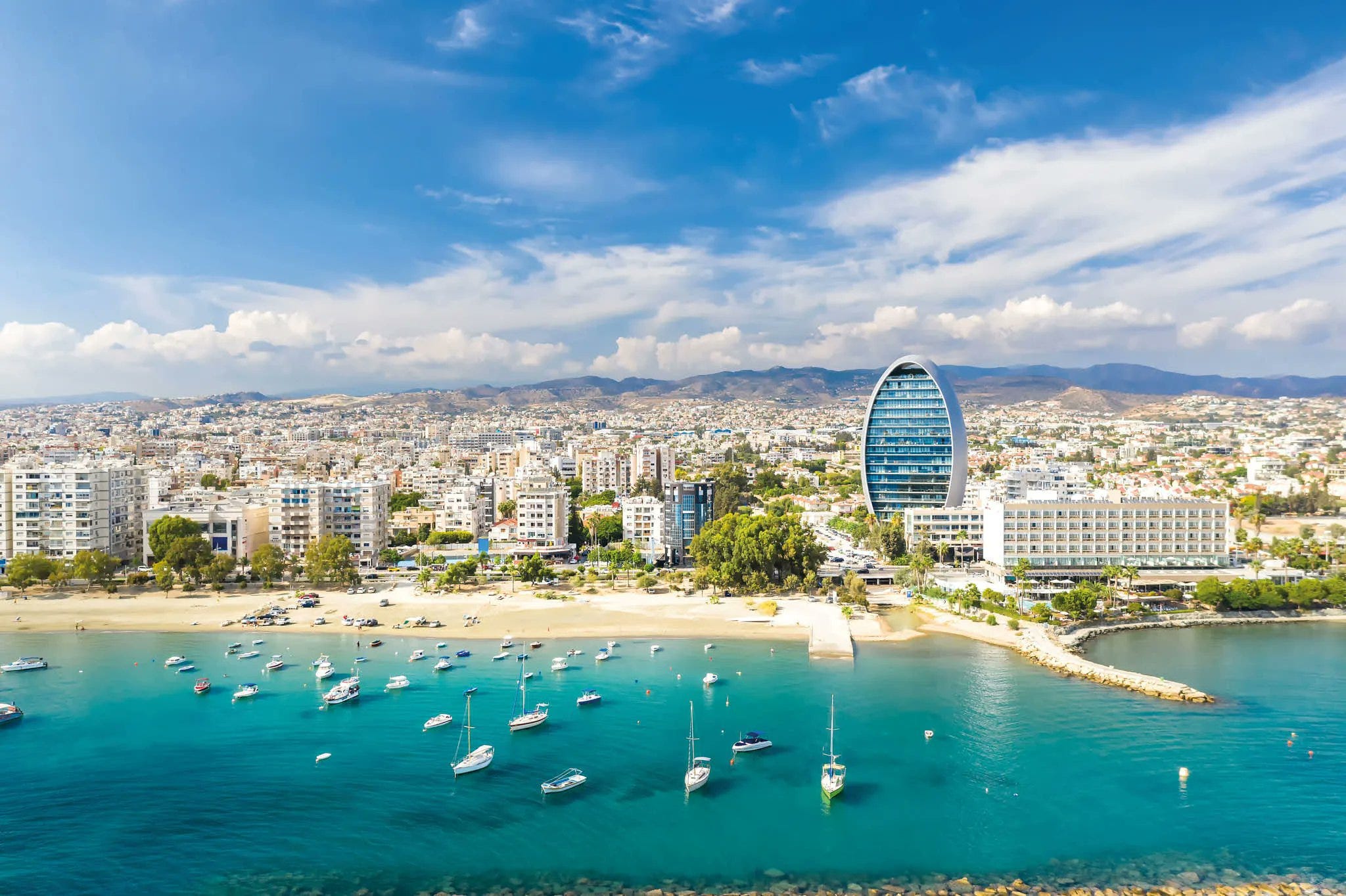
Best for: retirees who want a full life in English.
A 1BR runs €1,400–1,750/mo in Limassol, a lot less elsewhere. You get in on a temporary residence permit (the “pink slip”) or a permanent-residence route. Flights from LCA or PFO. Foreign pensions taxed at a flat 5%.
The most underrated place on this list, and the one I almost didn’t include. I have friends there, and every time I visit I’m treated with a warmth that’s hard to find anywhere. The food, to me, is some of the best in the Mediterranean, though I’ll admit not everyone agrees. It’s also the only spot where the language problem just doesn’t exist, English is everywhere, left over from the British years, along with driving on the left. You don’t need a word of Greek to build a life.
And it’s a good one: over 300 days of sun, the sea before lunch and the pine forests of the Troodos mountains by dinner, the same day. Meze that keeps coming, the Molos seafront in Limassol at golden hour, and an international community so deep you never feel like an outsider. The 5% flat rate on foreign pensions is nice, but the real signal is the survey: in the big annual expat happiness ranking, Cyprus landed in the top 15 while Italy sat in the bottom 10.
The downside: the US and Cyprus have no social-security agreement, so if you end up working locally you can get taxed for social security twice. Limassol got expensive on finance and relocation money, the summer is punishing, and getting to mainland Europe always means a flight.
10. Eindhoven and Utrecht 🇳🇱
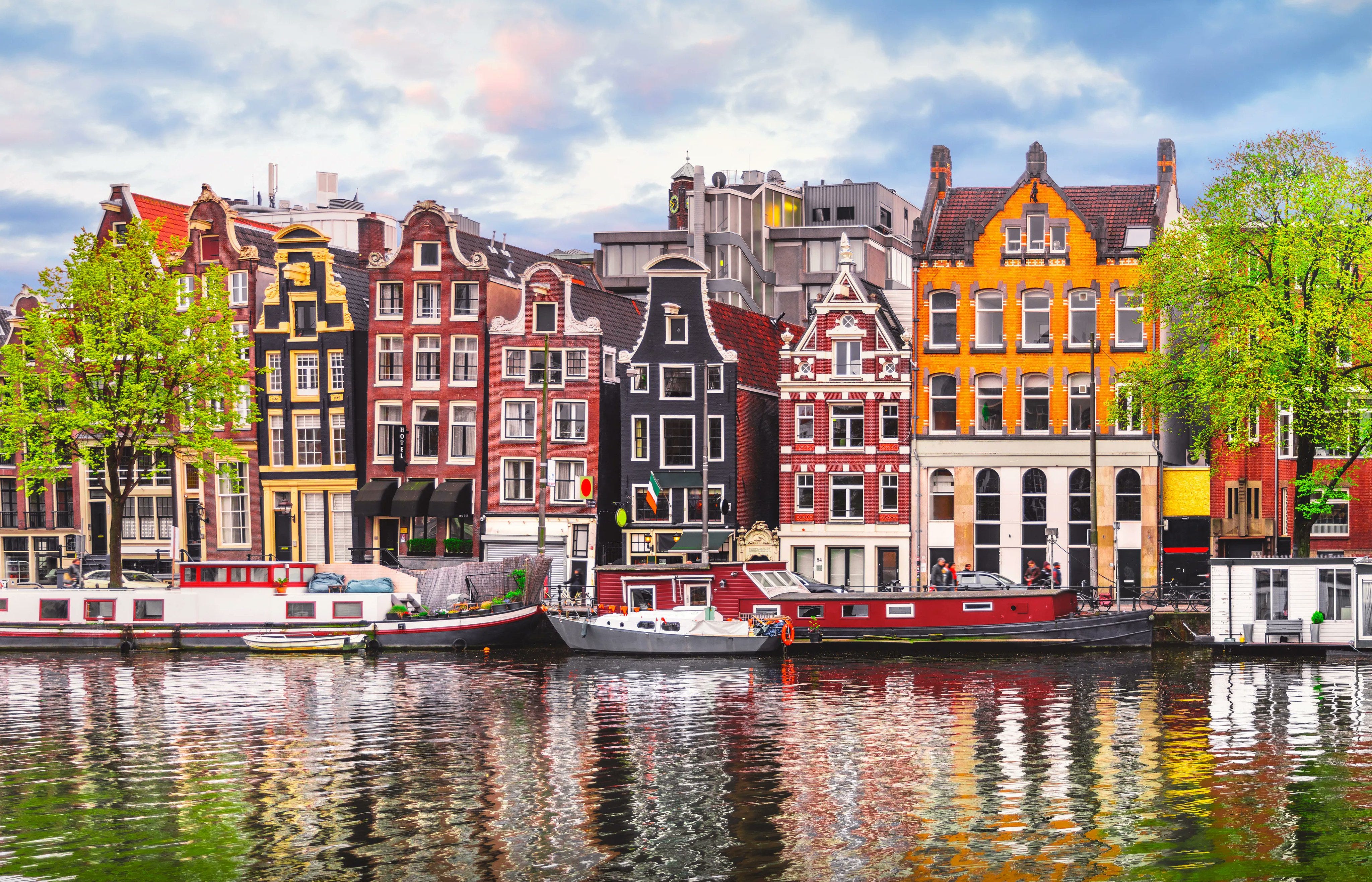
Best for: salaried tech workers with a signed contract. Not freelancers or retirees.
A 1BR runs €1,200–1,600/mo. Runs on an employer sponsoring you (the highly-skilled migrant route). Amsterdam is an hour by train.
I almost left the Netherlands off, then I remembered how many Americans I know doing well across Dutch cities. The Dutch are the exception among English-default countries: their English is excellent and they’re open in a way that makes landing easier than almost anywhere. For a career it earns its spot, and on purpose the pick isn’t Amsterdam. With a salaried tech job you get the cleanest setup in Europe: the 30% ruling, which lets roughly a third of your salary come in tax-free (dropping to 27% from 2027, income floor around €50K), and English as the working language. Eindhoven is the move, ASML alone is planning up to 20,000 jobs and the international crowd is growing faster there than anywhere in the country; you cycle to the tech campus in fifteen minutes and home past the Strijp-S design district at night. Utrecht is the calmer option, its canals have a lower wharf level Amsterdam’s don’t, old cellars turned into cafés right at the waterline, all the charm without the crush.
The catch is housing first: 53% of expats can’t find any, so make the employer sort it before you sign. Then watch Box 3, the Dutch tax on capital, and watch it closely. Today it taxes an assumed return on your worldwide assets. The reform set for 2028 would tax your actual returns at 36%, including unrealized gains, the paper rise in your stocks before you’ve sold a thing. That’s deeply un-American, and the loophole that once let new arrivals keep their overseas savings out of it has been closed. Add in the US reporting rules that make some Dutch banks refuse American clients, and this is a salaried-career play, not a place to park your investments. Freelancers and retirees, it isn’t built for you.
The biggest trap isn’t a city, it’s the mindset
I watched a friend walk straight into it last week.
It goes like this. An American spends a year in Portugal or Italy, looks around, and decides the locals just don’t know how to run things. So they set out to fix it. Open the sports club. Buy the olive farm or the vineyard. Bring the US playbook to a market that looks underserved. It almost never works.
Here’s why: Europeans know how to do things, the capability is there. What’s brutal is the system: slow, dysfunctional, counterintuitive in ways you can’t see from outside. The American blueprint doesn’t fail because Europe is stupid. It fails because Europe runs on a different logic, and you don’t get to skip the years it takes to learn it. If something here looks broken and easy to fix, ask why no local has fixed it already. It usually means you’re the one missing something.
So don’t assume Europe works like America. Don’t open a business on day one. Live a few years first, and keep your income where the economy still runs the way you understand it.
That’s the trap that costs people the most, and almost nobody warns them.
The dream cities that disappoint
None of these are bad, they’re just badly matched to what most Americans say they’re leaving for.
Lisbon 🇵🇹
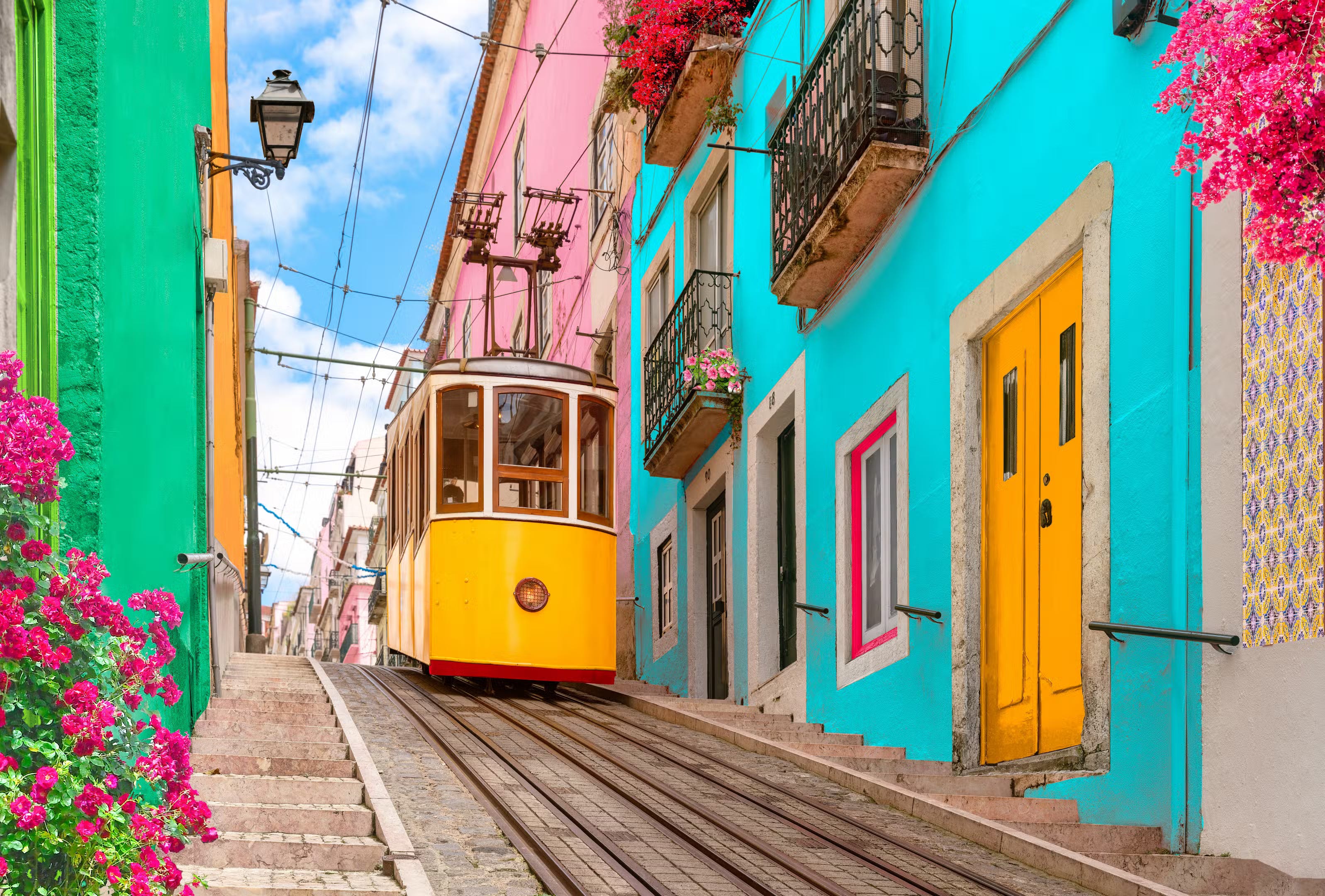
Prices ran around €6,500/m² by late 2025, well past €10,000 in the prime parts, with foreign buyers driving roughly a quarter of demand and paying around 60% more than locals. A central one-bed now rents for about what an average local earns in a month. And the resentment is out in the open, one protest sign read “1 digital nomad = many forced nomads.” But Lisbon still works for the right person, because it’s a real international hub, not some isolated village. There are 16,000-odd nomads, an American Club, the deepest English-speaking setup in southern Europe.
It’s a trap if you came chasing cheap Europe on a local salary. It’s fine if you keep your US income and treat it as the hub it is. Just don’t expect to be taken for a local.
Paris 🇫🇷
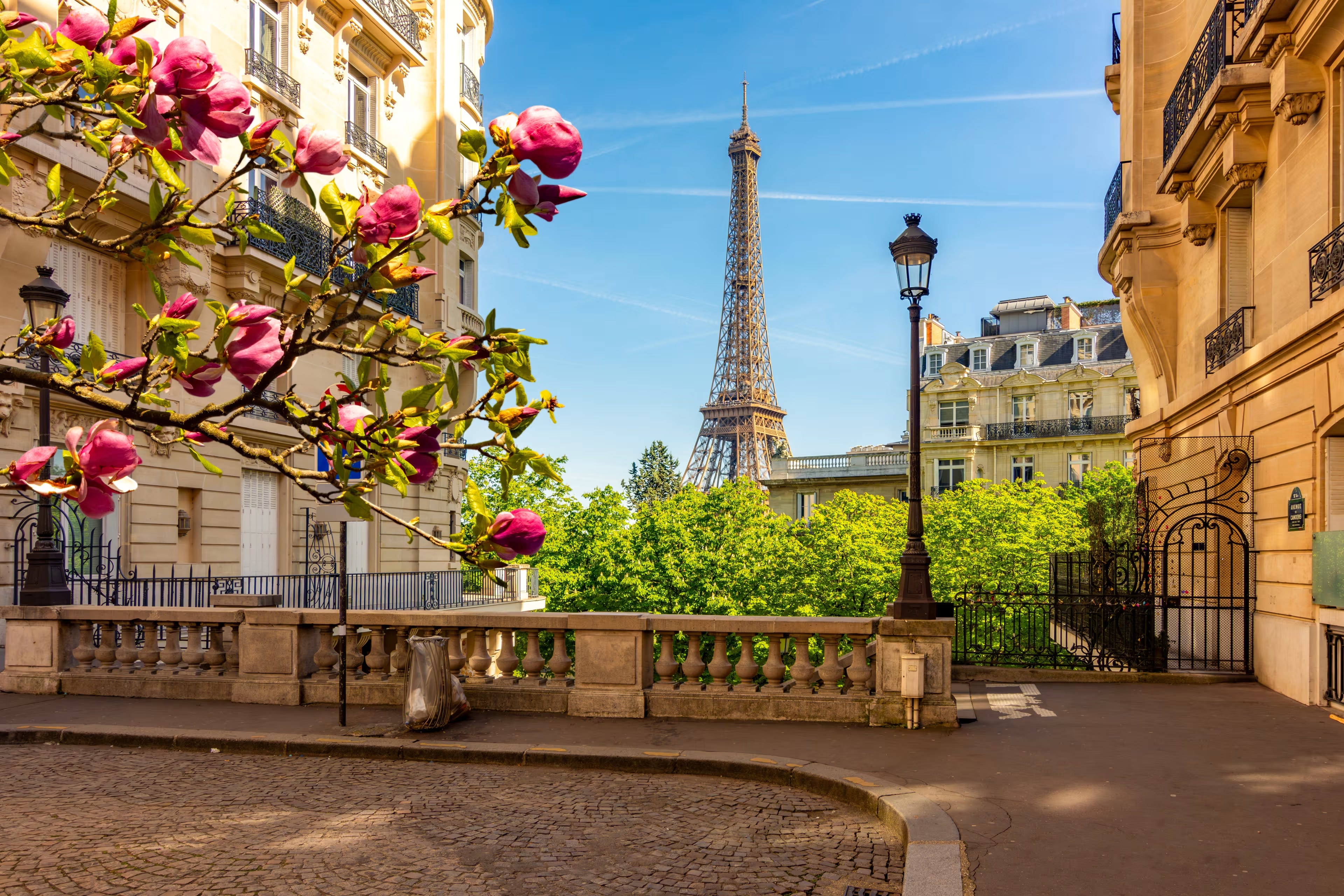
A dream to visit, hard to live in. It’s come dead last among expat cities in the big city survey, with more than 70% saying housing is unaffordable and a third finding the locals cold. A “central Paris apartment” is often a 9m² former maid’s room up six flights with no elevator. The admin is Kafka-level (the French say so too), and Parisians flip to English the second they catch your accent, so even people who speak the language well stay on the outside.
Paris pays off if you have a real reason to be there, a career in fashion or art or finance, a French partner, or enough money that €9,700/m² doesn’t sting. If you left the US wanting something calmer and simpler, this is the opposite of that. Take the treaty to Lyon.
Berlin 🇩🇪
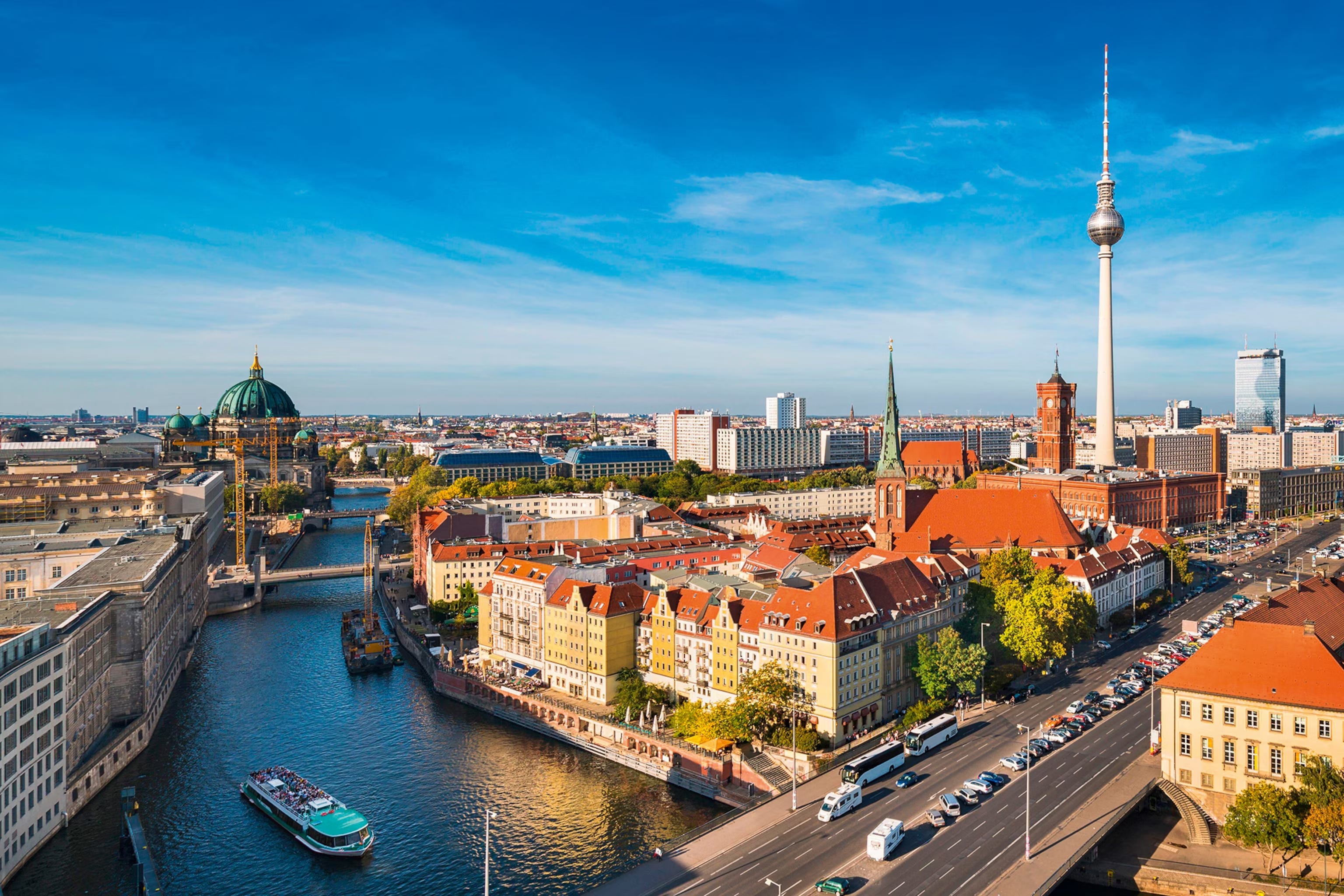
I looked at Berlin hard for years myself, so this comes from fondness, not a grudge. Germany ranks 50th of 53 for making friends and 42nd of 46 overall, and it’s not rudeness, it’s structural, Germans keep work and private life firmly apart, and a real friendship can take a year or more of showing up. Then the friction piles on. The credit-score catch-22 (no apartment without a local credit record, no credit record without an apartment, they call it the Schufa). The simple address registration everyone needs, booked weeks out. A church tax you get signed up for at 9% without noticing. New leases at double what sitting tenants pay, with almost nothing available.
And the one that catches older movers: after 55 you basically can’t get back into public health insurance. Berlin works for exactly one person: the under-45 with a salaried tech job treating it as a few years in an English-speaking bubble. For most others the downsides win.
A few reality checks
Not traps exactly, just go in with your eyes open.
The €1 house
This one can be a wonderful project for the right person, you just need to know what it actually is. The real number, once you renovate, is €100–150K and up, with hard deadlines that cost you your deposit if you miss them. It’s not a cheap house, it’s an active, hands-on project. If that’s what you want, and you’ve got a real reason to be in that town, go for it with your eyes open. Just don’t mistake it for a shortcut into Italy on the cheap.
Athens
Here’s a tell from my own phone: along with Lisbon, Greece is where I’ve got a whole list of real estate contacts I know well and like. Nothing wrong with that, but it says something about the momentum right now. Record tourism, rents pulling away from local wages, a fresh clampdown on short-term rentals in the center. If you want to live there and not just visit, Crete is the smarter call. Athens is still a magnificent city, just know you’d be buying in at a hot moment.
Croatia
This might be one of the most underpriced corners of Europe, Istria is basically Tuscany at a fraction of the price. The one real obstacle is tax: it’s the last EU country with no US tax treaty in force (a fix was signed in April 2026 but isn’t live yet), so for now you risk being taxed twice. Sort that out, and Croatia climbs this list fast.
And three things follow every American everywhere. Medicare stops at the border. US reporting rules push some EU banks to turn away American clients, so set up a US bank and brokerage before you go. And steer clear of European investment funds, a US tax rule makes them a paperwork nightmare and a brutal bill come April.
So where do you actually go?
After years of watching this from the local side, here’s where I land.
For retirees: France’s second cities for the treaty, Crete or a 7% town down south for the flat tax, Cyprus if you want it in English.
For remote workers: Valencia or Málaga if you rent, Las Palmas for the climate, Prague for the depth.
For families: Cyprus or Valencia for safety, space, and a soft landing in English. The Dutch cities if a job is paying the way.
For careers: let’s be objective, careers stay in the US. Maybe Switzerland, if you’ll trade friendships for a salary. If it has to be the EU, it’s Eindhoven or Utrecht with a signed contract and housing sorted, or Dublin if Big Tech is footing the bill (the rents there are brutal, so make them handle it). Not much else qualifies.
For everyone: the place that looks best in photos and the place you’re still happy in come February are almost never the same place.
And the one rule under all of it: keep your income in America. The Americans I see happiest here earn in dollars and spend in euros. A founder whose US company still runs. An engineer drawing a New York salary from a laptop. A retiree on a US pension. The money comes from the system they already know, and gets spent in the one they came for. Let Europe be the life, not the business plan.
The ones who leave likely chose with their eyes and heart, not their head.
The ones who thrive bring their income, learn the language slowly but every day, and pick the second city over the famous one.
Reply and let me know which of these speaks to your situation, or if there’s one I missed.
And if you enjoyed this, click the ❤️ button and restack.
Stay free, Ale
Writing from Lisbon
This is a great guide. But could we please stop with the expat nonsense. People want to move? Unless they are literally on a short term secondment with a job, they are immigrants. Let’s normalise this for everyone.
We relocated to Athens in 2023 coming in on a Golden Visa. We used a law firm to manage our real estate and visa transactions. At the time were we told by locals that we overpaid for our home, but real estate prices now make our purchase a bargain. We have been in Greek school for three years and sometimes it feels hopeless, but we are learning. Yes, we will always be Other but we were also Other in the US, so why not be Orher in a beautiful, vibrate city where the quality of our day to day lives is infinitely better than most places we lived in the US.