


I live in Portugal, and since the NHR closed the same question comes back almost every week, from friends, readers and the families I work with: so where now?
The answer surprises most people. Yes, you can still live in Europe tax-optimised, legally, and in some cases at almost zero tax. It depends on your setup, but it's real.
That doesn't make Europe a tax haven. It isn't one, and it never will be. There are caveats you can't ignore, from exit taxes to everything that comes with becoming resident somewhere new.
But the deals Europe offers newcomers are among the best in the world, and the wealthiest families already know it.
The reason is simple, and a bit unfair: Europe runs on two prices.
If you were born here, you pay the full one. Italy, France, Germany, Spain, the Nordics: some of the highest taxes in the world, unforgiving bureaucracies, and very little you can do about it as long as you stay.
If you move in from abroad, you often pay a very different one. Almost every country in the south keeps a door open for newcomers: a fixed cheque instead of a percentage, foreign income left alone for years, half of your salary untaxed, and in a few places, nothing at all.
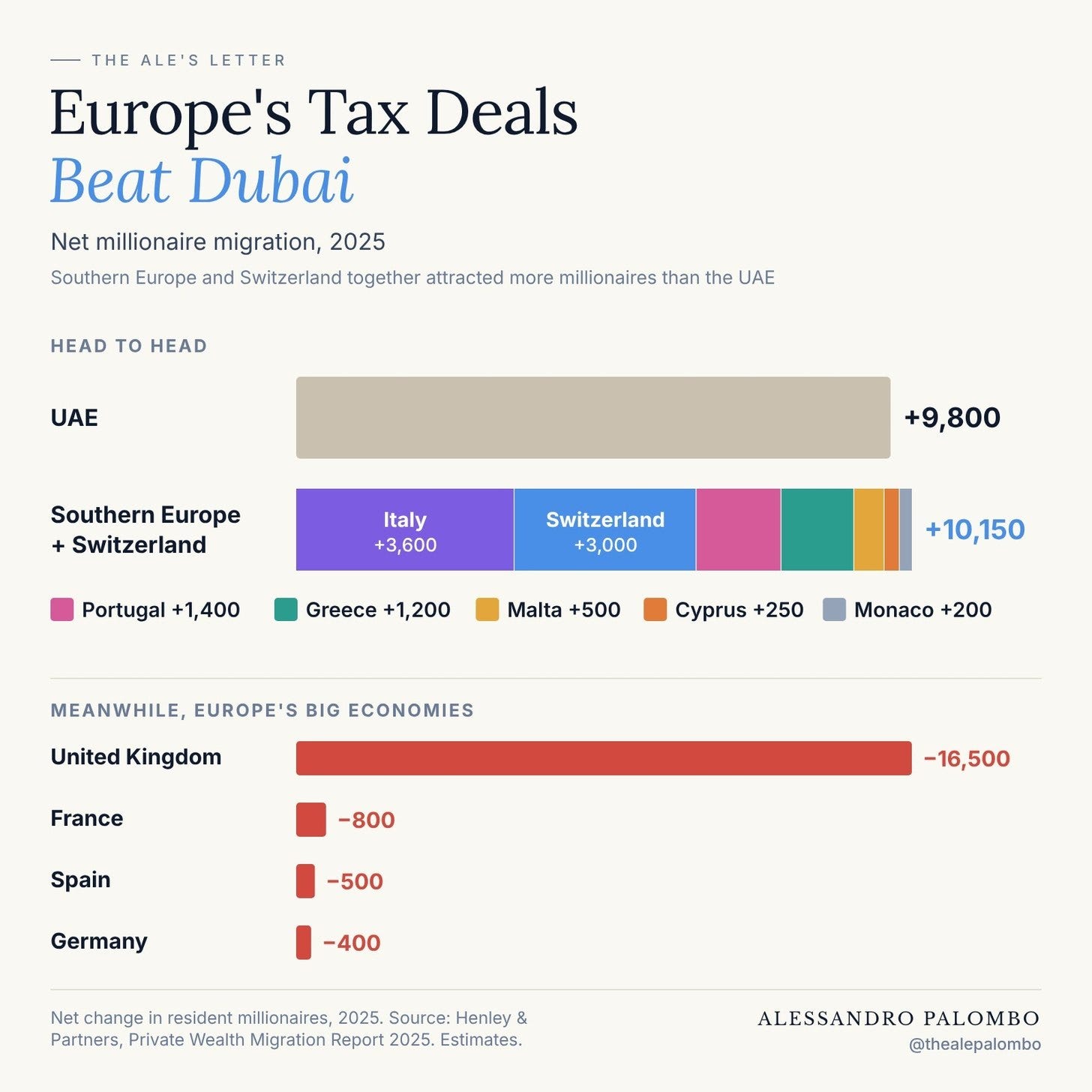
The numbers back it up. In 2025, by Henley's estimates, Italy, Switzerland, Portugal, Greece, Malta, Cyprus and Monaco together attracted more millionaires than the UAE, Dubai included. Italy alone took in more than a third of what the Emirates did. This year Henley even gave the trend a name: the Mediterranean's quiet ascendancy. I talked about it in my video in September, and I still think we're early.
Before you start
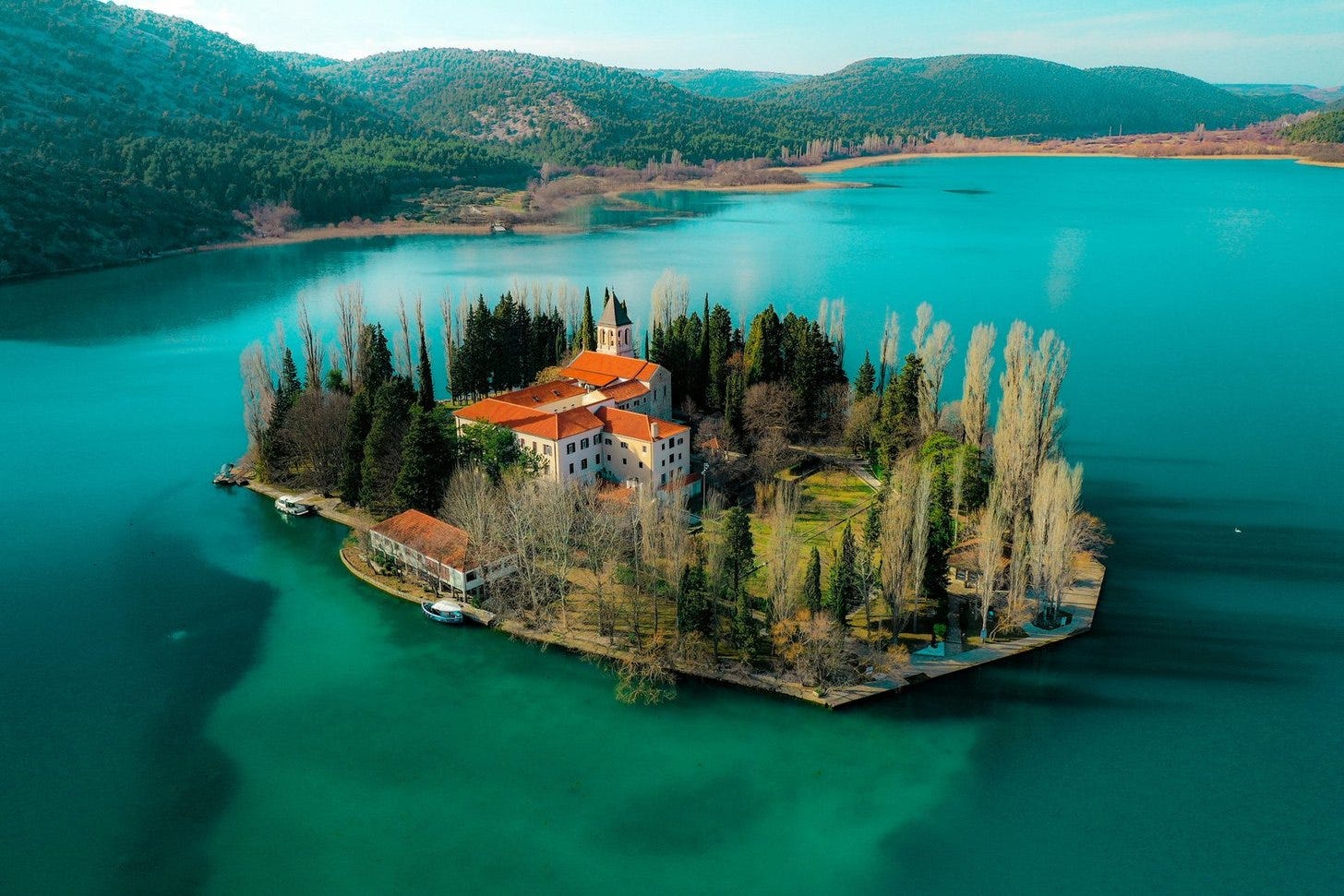
I'm an Italian qualified lawyer, I've lived in six countries, and every week I talk with people making exactly this move. I also run companies in this sector, so I have skin in the game, even if indirectly. Everything below is my own research and my own view, verified as of October 2026.
Two things matter more than any rate in this guide.
The first is that these are nuanced, technical topics. Take this guide as an overview, and consult your own adviser before you move.
The second is that, even if I discuss tax all the time, I've personally come to the conclusion that tax is, and should be, one of the reasons to move, never the only one.
So start from here: from the life you want. Where you want to wake up, the weather, the people around you, the schools, the airport. Tax is the point of arrival, and this guide is built to let you reverse engineer it: pick the life first, then see which regime makes it work.
In the end, to borrow a famous line, it's better to laugh under an imperfect tax regime than to cry at 0%.
How to use this guide

You can read it in three ways.
If you have five minutes, read the short answer. You get the places I'd look at first, matched with the sun, and who each one is for.
If you're seriously planning a move, read the thesis, find yourself in the short answer, then go straight to the cards of the two or three places that fit you.
If you are American, read your chapter first. The IRS follows you everywhere, and that changes the ranking.
Every place has the same card, so you can compare them side by side. Best for tells you who it suits: if that's not you, skip it. Then how it works, what you really pay, how to get in, the sun, the catch, and my take.
On the order of the parts: I start from the profiles I meet most often and move towards the most exclusive ones.
Part 1, foreign income untaxed for a number of years, is mostly for entrepreneurs and founders. If your companies, clients or structures sit outside the country you move to, these regimes leave exactly that income alone, so for most of you this is the place to start. What counts as foreign income is the key question, and I explain it at the start of Part 1.
Part 2, low tax for everyone, is for people who prefer simple rules with no clock, from the freelancer in Bulgaria to the very wealthy in Monaco.
Part 3, the non-doms, is for investors who live off dividends, interest and gains.
Part 4, the cheque or the cap, is for very high incomes, roughly from a million a year.
Part 5 is for retirees with a foreign pension, and Part 6 for people moving to work for a local company.
What's inside:
The thesis
Where optimised tax meets the perfect Mediterranean climate
The short answer: the top places, tax and sun together
Part 1: Foreign income untaxed, for a number of years (Turkey, Spain, Portugal, the UK, Croatia, Montenegro)
Part 2: Low tax for everyone, with no clock (Monaco, Bulgaria, Andorra, Georgia)
Part 3: The non-doms (Cyprus, Malta, Ireland)
Part 4: The cheque or the cap (Italy, Greece, Switzerland, Poland, San Marino, the Isle of Man, Jersey and Guernsey, Gibraltar)
Part 5: The pensioner's rate (southern Italy, Greece, Morocco and Tunisia)
Part 6: If you will work locally
Also on my radar
The thermometer: what changes, and what may change next
The European traps
If you are American
The honest pushback
Final thoughts
The thesis

All these regimes run on the same logic. Europe taxes its own people heavily, it needs new money, so it offers newcomers a better deal, for a limited time. Often the goal is to win back the people who left for lack of opportunity: that was the main rationale behind Italy's attempt to reverse its brain drain.
Look at the last two years. The UK abolished non-dom. Portugal closed the NHR. Italy tripled its flat tax. Malta and Andorra raised the entry ticket, and Gibraltar more than doubled its wealth test. Almost every one of these changes protected the people already inside, who kept the old deal.
So in my view the most important fact in this guide is simple: you usually get the regime in force the year you move, and you keep it. Timing, then, matters as much as the rate, because the doors tend to close for whoever comes next.
The second half of the thesis is the sun. None of these regimes is easy or automatic: every one of them takes serious work, paperwork and a real move. Once you remove the places that only work on paper, the choice very often comes down to the weather, and to where you actually want to spend your winters. If you're going to make the effort anyway, why not make it somewhere with great weather?
Here is the whole map in one picture: twenty-two places, in four families, plus the pensioner regimes.
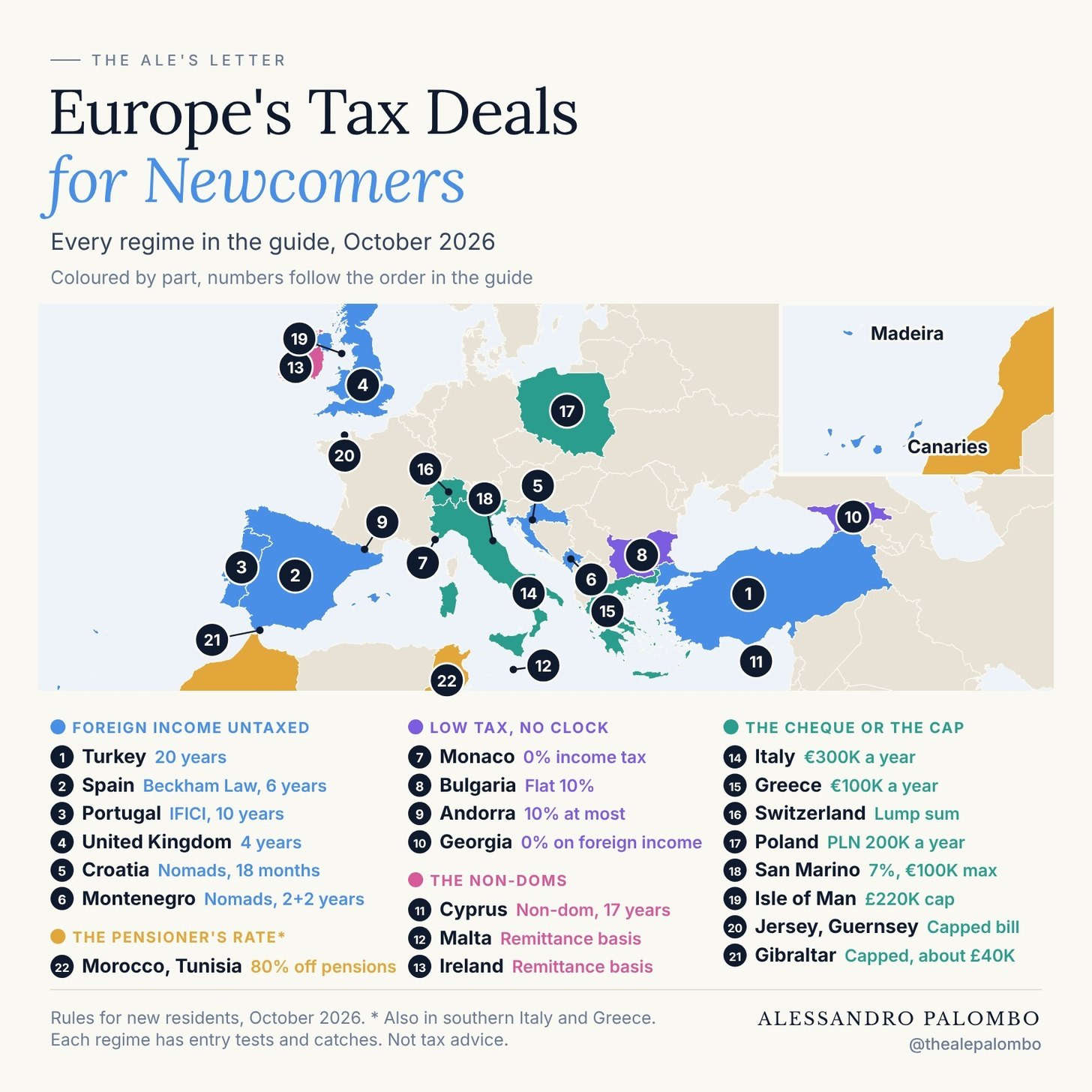
Where optimised tax meets the perfect Mediterranean climate
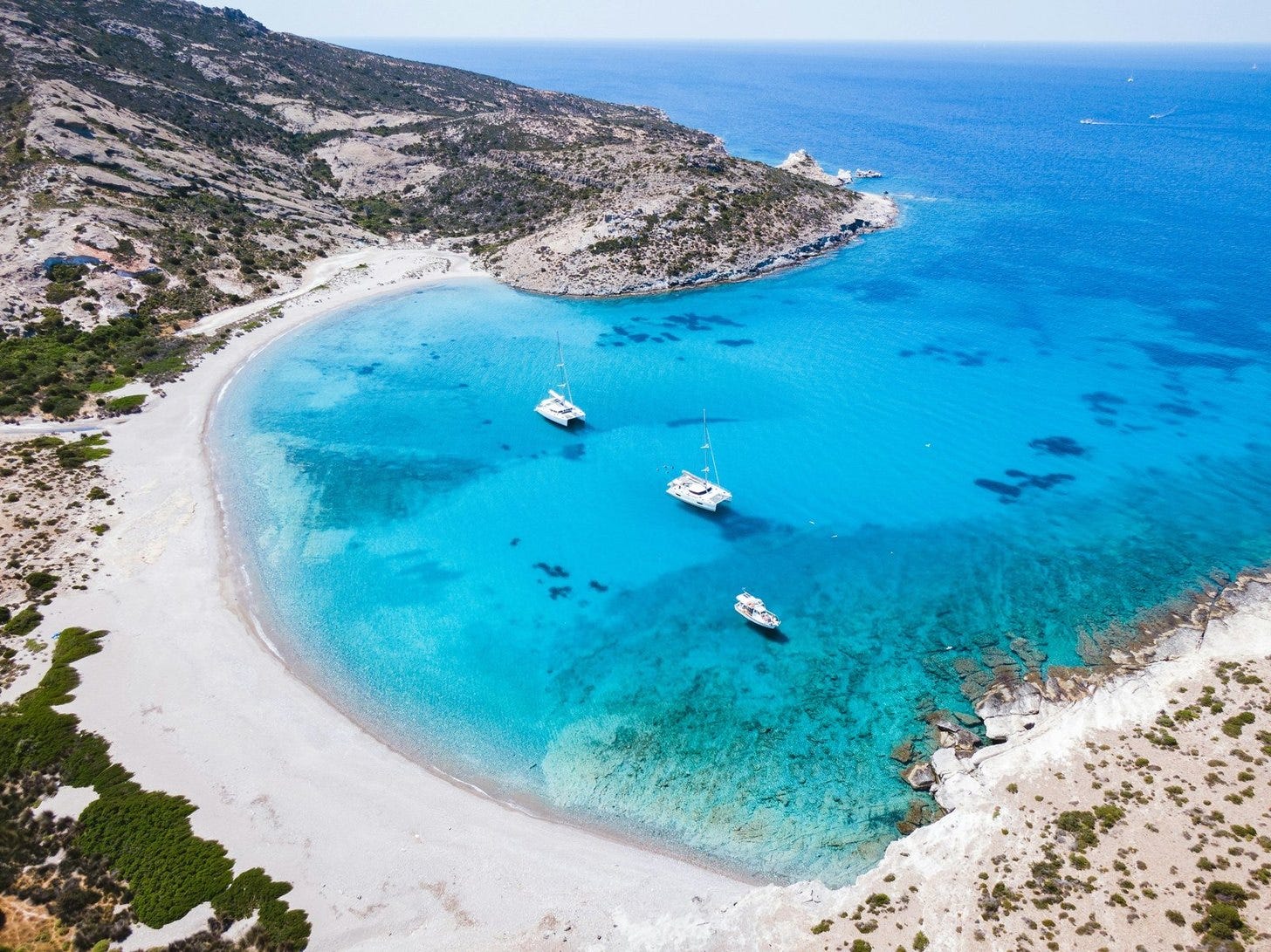
If you've followed me for a while, you know I've been writing a lot recently about the importance of a Mediterranean climate. Everyone builds their life their own way, but many of my readers essentially want two things: nice weather and a tax-optimised place. So my criterion here is simple: the number of days in a year with an afternoon between 20 and 28 degrees, and mostly no rain.
Now, this is of course a specific criterion. Some people prefer colder weather, others mild weather all year round. Please take it as such, and if you'd like, in the future we can explore other criteria too.
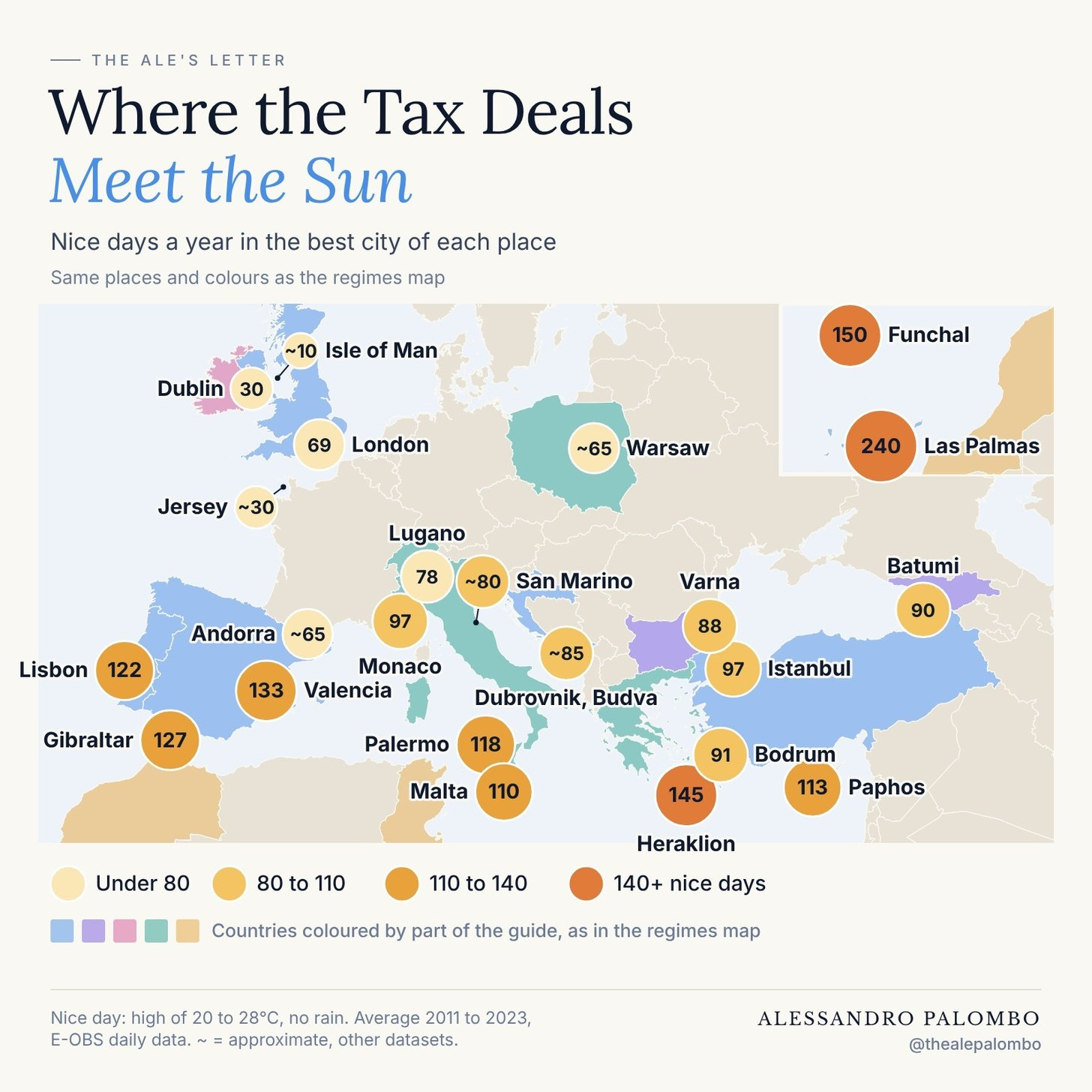
How did I count them? I went back to 2011 and looked at the real weather, day by day, in the best city of each place, then took the average year. It's the same way I built my best-climates maps. For a handful of places the European records don't cover, I used other sources and rounded, and you'll see those marked as approximate.
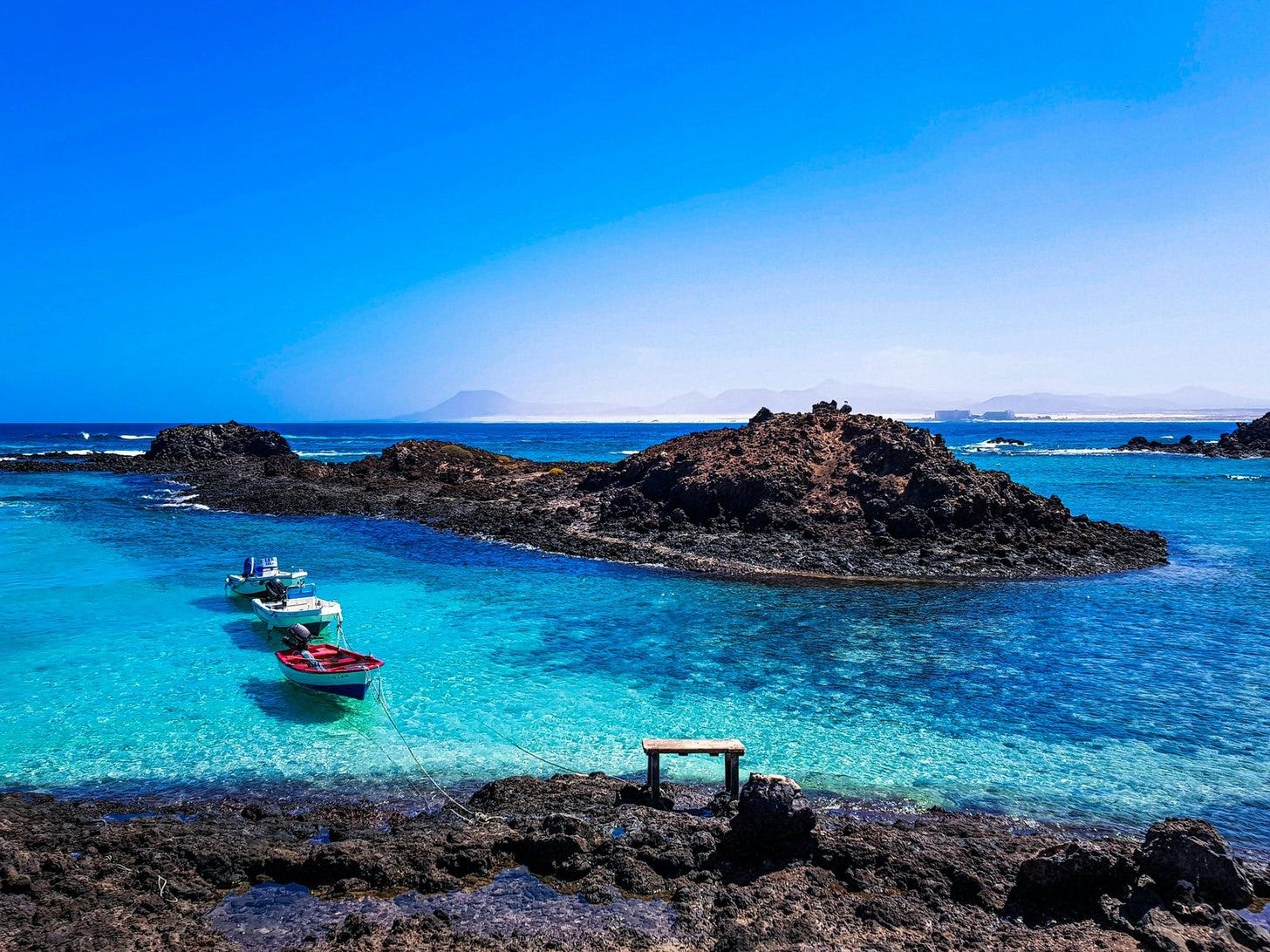
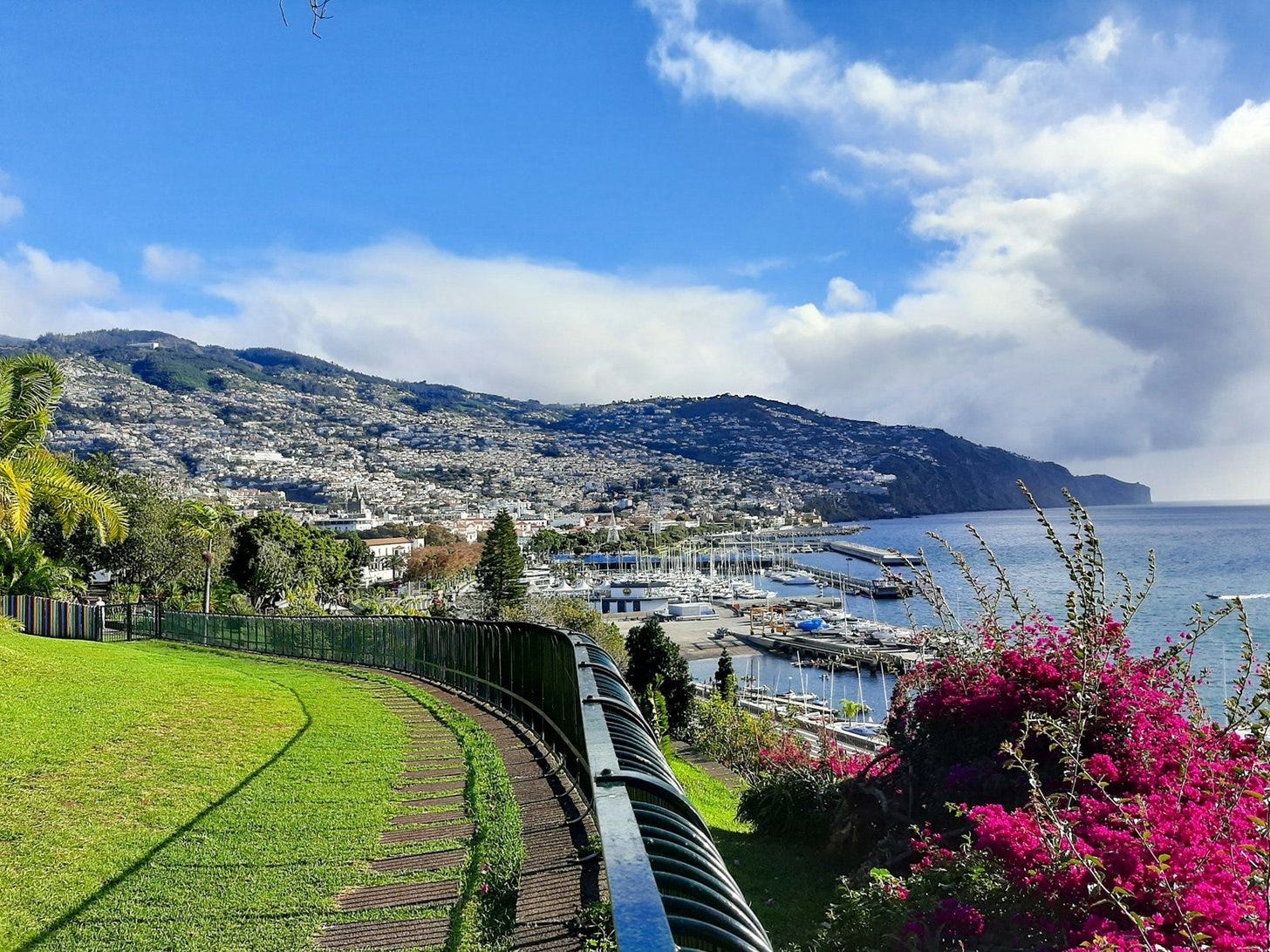
The Canary Islands are in a league of their own, with around eight months of nice days a year, about twice anywhere on the mainland. Madeira and Crete come next, with almost five. Then a Mediterranean pack within a few weeks of each other, Valencia, Gibraltar, Lisbon, Palermo, Paphos and Malta, around four months each. Monaco, Istanbul, Bodrum, Batumi, Varna and the Montenegrin coast sit around three. London, Warsaw and the Alpine places get about two, Dublin and Jersey about one, and the Isle of Man less than two weeks.
Two things surprised me. The south doesn't win by default: in Antalya, Nicosia or Seville the summer is simply too hot to count, so a long spring and a long autumn matter more than a hot July. And some of the most generous regimes are in the greyest parts of Europe.
The short answer: the top places, tax and sun together
I ranked the places by how well the life, the weather and the tax deal work together today, and for each one I tell you who it really fits.
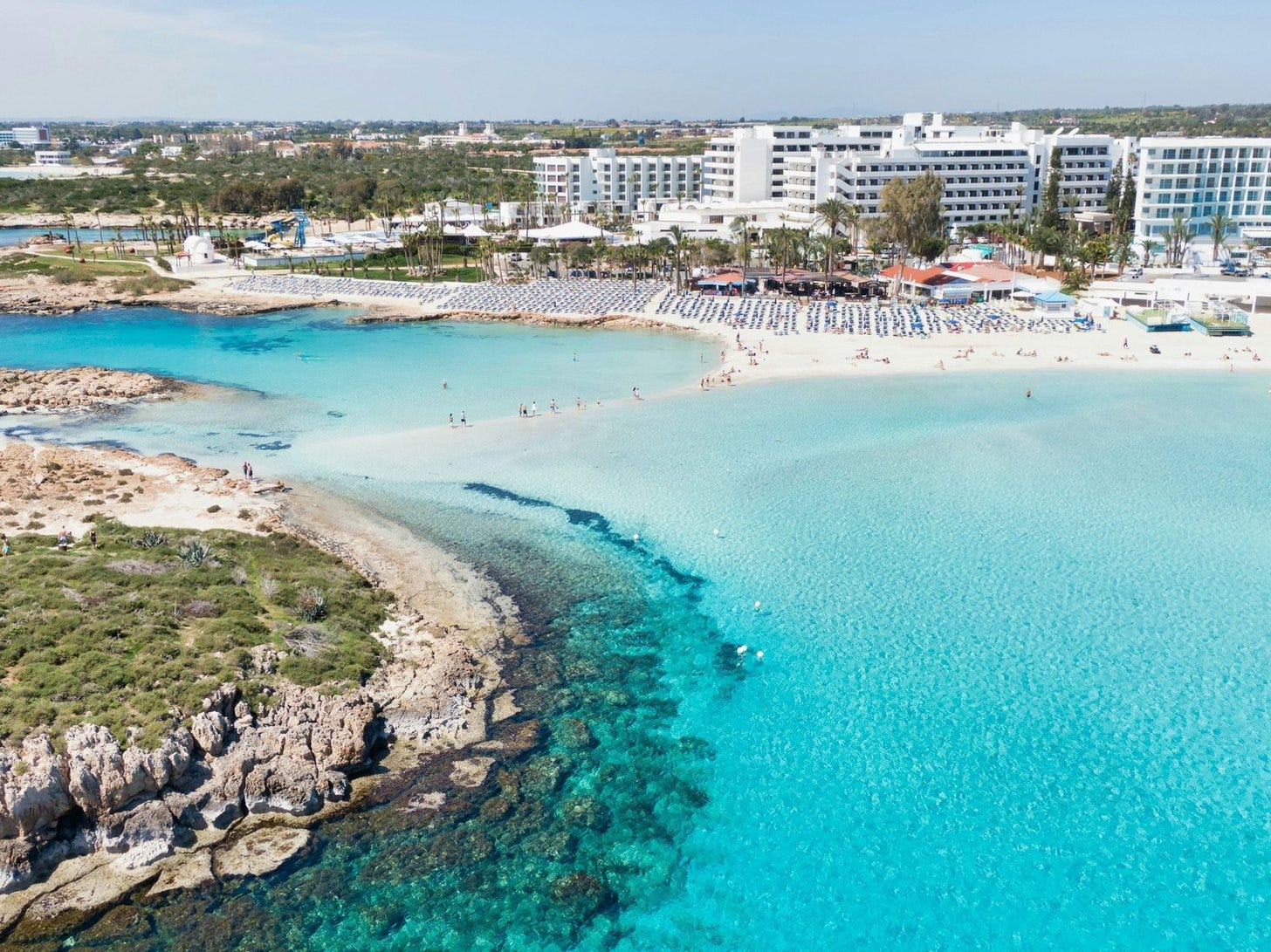
1. Paphos and Limassol, Cyprus. Almost four months of nice days, and today, all in, my overall pick. Best for: portfolio investors and business owners living off dividends and interest, for up to seventeen years.
2. The Canary Islands, Spain. Around eight months of nice days, and the Beckham Law applies here too. Best for: employees, remote employees, company directors and founders moving for real work, especially if they also hold foreign investments.
3. Madeira, Portugal. Almost five months of nice days, under IFICI. Best for: founders, researchers and senior tech profiles working for a qualifying Portuguese company.
If you're American, the order changes: the 7% pension regimes move to the top, and the big flat cheques drop out. I explain why in your chapter.
The rest of my top ten and all twenty-two cards are for paid subscribers.