How to Acquire the World's Most Powerful Passport
And why traditional passport rankings are totally misleading

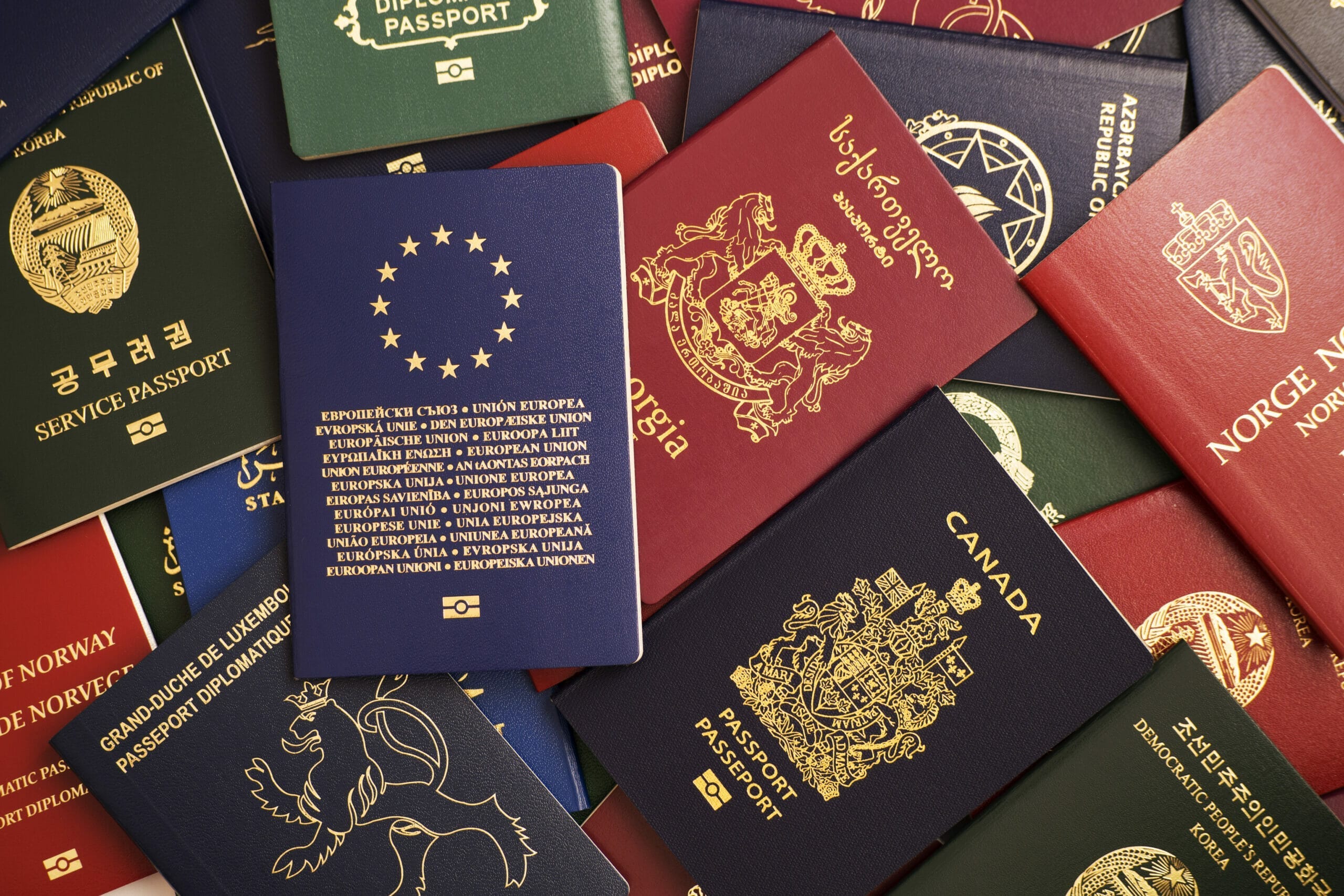
I’m an ex-lawyer with a PhD in Public Law.
I’ve navigated citizenship and residency programs for years – first for myself, then helping friends, and now advising clients. I’ve worked with governments on blockchain regulation and guided hundreds through Portugal’s Golden Visa, Dubai setups, and everything in between.
With these credentials, I’ve unsurprisingly been asked many times over the years about my thoughts on the most powerful passport and my take on various passport rankings.
I’ve had a lot of time to consider my take on these matters.
In this guide I will reveal what I believe is the most powerful passport in the world, why it’s no. 1, and how to acquire it.
But first…
Why Passport Rankings Miss the Point
Here’s how the standard methodology works:
Count visa-free destinations → Higher number = Better passport
By this logic, a passport that lets you visit France for 90 days along with a smorgasbord of other countries ranks almost as high as French citizenship itself.
Visiting a country for 90 days means you can enjoy the French cuisine for a few weeks; it won’t make you French, nor will you be able to build your life there. But beyond that what else do you really gain?
And say that 90-day visa-free access comes from a Caribbean passport, that arrangement could change tomorrow based on bilateral agreements you have zero control over.
Meanwhile, you get French citizenship? Now you have permanent rights protected by centuries of legal precedent and EU treaty obligations.
Comparing these as equivalent is like comparing a 90-day Airbnb rental to owning property.
Simply, it’s misleading.
And there are other factors that are much more important.
What Actually Matters
Here’s the framework I use…
A powerful passport gives you permanent, unrestricted ability to:
Conduct business across multiple stable jurisdictions
Access healthcare without restrictions or bureaucracy
Open bank accounts easily
Reside long-term with your family in safety
Educate children at world-class institutions
Protect assets under proven rule of law
And critically: how stable is this regime over decades?
This is what sophisticated investors optimize for – not just vacation destinations.
So taking all this into account, the question remains…
What is the most powerful passport in the world?
The EU Passport: The Contrarian Winner
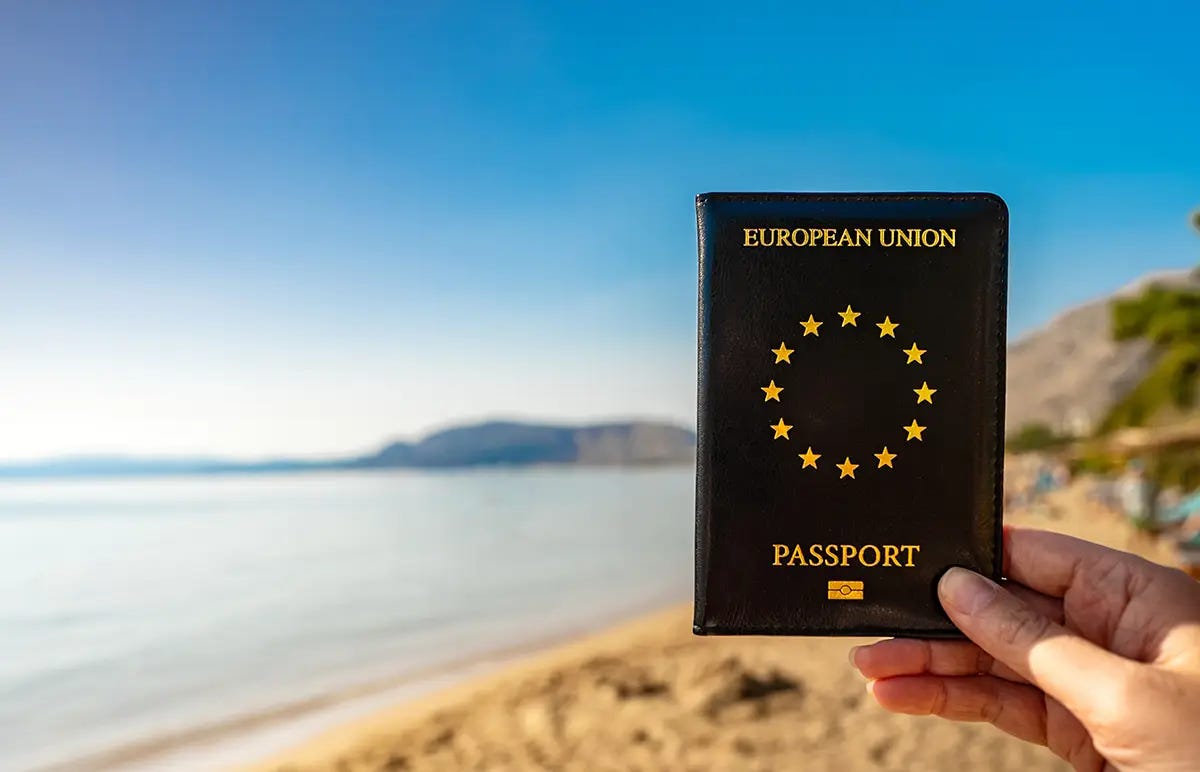
There’s only one passport that gives you full rights to 27 countries simultaneously:
The EU passport.
As an EU citizen, you and your children can live permanently anywhere in the EU, work without permits across 27 economies, start businesses with full legal protections, access healthcare in any member state, attend universities at local rates (often free or near-free), and move freely between jurisdictions as circumstances change.
You have permanent optionality with some of the most robust constitutions in the world.
If in 2030 you want to launch a startup in Estonia’s e-residency ecosystem, you can. If in 2032 your family wants Swedish education and healthcare, you relocate. If tomorrow’s political situation changes anywhere, you have 26 backup options.
No other citizenship offers this combination of diversity, stability, and freedom of movement.
At this point for most of you, I know what you’re probably thinking.
So let me break this down further…
The Contrarian Europe Thesis
Most people think Europe is finished.
I hear it constantly: “Bureaucratic.” “Declining GDP share.” “Slow growth.” “Socialist nightmare.”
The bear case has become so consensus it’s frankly boring.
But on top of the optionality and security that an EU citizenship provides, here’s another angle to consider:
When AGI arrives and productivity becomes infinite, what actually becomes scarce?
Not another piece of software. Not productivity gains. Not scalable digital products.
Authentic human experience that took centuries to create.
And where in the world is that more abundant than Europe?
500+ UNESCO World Heritage sites (the US has 25)
The world’s greatest museums, libraries, opera houses
50 million annual cultural tourists in France alone
Medieval towns where every corner has history
Universities that have survived empires (Bologna: founded 1088)
My take is that Southern Italy is one of the best arbitrage opportunities right now.
Read my previous posts for more in depth breakdowns of the specific set ups and locations in Italy:


The reality is this:
You can replicate Singapore’s efficiency with enough capital and political will. But you can’t replicate or create from scratch Florence’s Renaissance architecture, Vienna’s classical music tradition, Paris’s café culture, or Rome’s layers of history stacked across millennia.
Europe today is like Bitcoin at $100 – misunderstood, underpriced, wildly asymmetric.
But before we get to how to acquire the EU passport, let me address a second common criticism…
What about European hyper-control?
The counter-thesis is fourfold.
First, if Europe imposes a strict vigilance system, you can be sure the US is already doing something very similar – as has always been the case.
Second, citizenship does not oblige you to reside, nor to subject yourself to regulations you don’t support.
Third, living in Europe does not require you to hold assets exclusively there – on the contrary, Europe often enhances global flexibility.
And finally, Europe is highly variegated; there will almost certainly always be jurisdictions such as Malta or Cyprus that remain friendly to global setups. This is not to suggest that:
“Europe is perfect.”
Rather, the point is that dismissing it through superficial criticism risks obscuring a fundamental truth:
The optionality across 27 sovereign countries is itself an immense asset.
So how do you acquire the powerful EU passport?
The Four Pathways to EU Citizenship
1. Investment-Based Routes (Golden Visas)
🇵🇹 Portugal - The Unmatched Standard
Investment: €500K fund / €250K cultural donation / job creation
Timeline: 5 years to citizenship (proposed extension to 7-10 years)
Physical presence: Average 7 days per year (14 days every 2 years)
Processing: ~18 months for residence permit
Why Portugal dominates: It’s the only EU country offering citizenship without genuine relocation. Every other program requires you to actually move there.
Critical timing note: Constitutional protection applies if you invest before any law change. The 5-year citizenship timeline will likely become 7 or 10 years (rumors from credible sources say 7).
For Bitcoin holders specifically: Capital gains exempt after 365 days holding. Crypto-to-crypto swaps not taxable events. This aligns perfectly with HODLing philosophy if you’re a Bitcoiner.
If you are serious about securing the current terms for the Portugal Golden Visa pathway, we at Bitizenship have created an innovative solution combining EU residency with Bitcoin – allowing you to invest the €500K requirement while acquiring exposure to Bitcoin.
Schedule a free consultation call.
We’ll give you our unbiased take and discuss the pros and cons to determine if this is a fit for you.
🇬🇷 Greece - Residency With Strict Relocation For Citizenship Path
Investment: €250K-€800K real estate / €500K bonds / €250K startup
Timeline: 7+ years to citizenship
Physical presence: Zero for residency maintenance, considerable presence required for citizenship
Citizenship: Requires 7 years tax residency (183+ days/year) plus language and integration tests
Greece gives you Schengen access and zero presence requirements for the permit. But if you want EU citizenship, you must actually relocate and integrate. This isn’t a pathway for those wanting citizenship without moving.
🇮🇹 Italy - Long Timeline, Multiple Options
Investment: €250K startups / €500K companies / €1M philanthropy / €2M bonds
Timeline: 10 years legal residence required
Physical presence: None for permit, 183+ days/year for citizenship
Language: B1 Italian proficiency required
Tax advantage: €200K/year flat tax on foreign income for UHNWIs (15-year limit).
Flexible investment options, but the 10-year citizenship timeline with genuine residence requirement makes this a true relocation decision.
🇨🇾 Cyprus - Permanent Residency with Optional Citizenship
Investment: €300K real estate
Timeline: 5 years actual residence for citizenship eligibility
Physical presence: Visit once every 2 years for PR maintenance
Tax: Non-dom program (0% on foreign income for 17 years)
Strategic use: Low-cost EU residency with tax benefits. Citizenship requires genuine relocation.
🇭🇺 Hungary - Lower Cost, Longer Timeline
Investment: €250K real estate fund / €1M education donation
Timeline: 10 years total (5 years to PR, then 5 more)
Physical presence: None for permit maintenance
Citizenship: Requires Hungarian language/history exam
The value proposition: Lowest EU entry cost, but longest citizenship timeline and language requirements make this challenging.
2. Citizenship by Descent (Fastest if Eligible)
🇮🇹 Italy - Now Restricted
Eligibility: Parent or grandparent only (changed 2025–no longer unlimited generations)
Cost: €600 per adult plus documentation (~€1-1.5K total)
Timeline: 1-2 years Italy, 2-5+ years via consulate
Critical: Pre-1948 maternal claims require judicial process
Urgency: Italy just dramatically restricted this. Apply immediately if eligible.
🇮🇪 Ireland - Fast Track with UK Access
Eligibility: Up to grandparent (3rd generation)
Cost: €278 fee plus documentation (~€500 total)
Timeline: 9-12 months
No residency or language requirement
Bonus: Common Travel Area access to UK post-Brexit. Children born after your registration auto-qualify. Children born before must apply separately.
🇵🇱 Poland - Broad Eligibility
Eligibility: No generation cap, documentation increases per generation
Cost: ~€500-1K
Timeline: 1-2 years
🇬🇷 Greece - Combines with Digital Nomad
Eligibility: Greek parent/grandparent (each generation must claim first)
Cost: ~€200-500
Timeline: 1-3 years
No residency requirement, consulate process
3. Citizenship by Marriage
🇪🇸 Spain - Fastest Marriage Route
Timeline: 1 year legal residency in Spain after marriage
Requirements: DELE A2 Spanish plus CCSE culture test
Must actually live in Spain (183+ days) with spouse
Note: As of March 2025, Italy no longer accepts applications from abroad. Only spouses residing in Italy qualify.
🇮🇪 Ireland - EU + UK Access
Timeline: 3 years total (1 year continuous)
No language requirement
Strong business environment
🇩🇪 Germany - Economic Powerhouse
Timeline: 3 years residency (2 years married)
Requirements: B1 German proficiency
Access to Europe’s largest economy
4. Naturalization Through Residency
🇵🇹 Portugal - Fastest Standard Path
Timeline: 5 years legal residency
Requirements: 183+ days/year, A2 Portuguese
IFICI tax regime available for new residents
🇸🇪 Sweden - Top Social Services
Current: 5 years continuous residence
Proposed (June 2026): 8 years for most applicants
🇫🇷 France - Cultural Appeal
Timeline: 5 years (2 years with French degree)
Requirements: 183+ days/year, B1 French
🇮🇪 Ireland - Entrepreneur Route
Timeline: 5 years via Start-Up Entrepreneur Programme (STEP)
Investment: €50K minimum plus €1K+ setup costs
Requirements: Scalable business, 2 jobs year 1, target 10 jobs €1M revenue in 3-4 years
Tax advantage: Non-dom regime (foreign income untaxed if not remitted)
🇩🇪 Germany - Strong Employment Path
Timeline: 5 years (3 years with exceptional integration)
Requirements: 183+ days/year, B1 German
Tax Implications by Country
Portugal: IFICI (NHR 2.0) - 20% on local income for eligible professions, 0% foreign income with proper structuring
Ireland: Non-dom regime - 0% on foreign income if not remitted (no time limit)
Greece: 50% income tax exemption for 7 years for new residents; 7% flat tax on foreign pensions for retirees (15 years)
Spain: Beckham Law - 24% flat on Spanish income up to €600K
Italy: €200K/year flat tax on foreign income (15 years for UHNWIs)
Cyprus: Non-dom - 0% on foreign income for 17 years
France: Wealth tax on real estate over €1.3M; new residents exempt on foreign properties for 5 years
Who Should Act Now
If you have European ancestry: Check descent programs immediately. Italy just restricted. Others will follow.
If considering Portugal Golden Visa: Constitutional protection applies if you invest before law changes.
If building location-independent income: Start positioning now. Citizenship can’t be acquired in a crisis.
If you already have EU citizenship: Understand the strategic value you’re holding. Don’t take it for granted.
Final Thoughts

I’m Italian by birth. For years, I dismissed Europe as the place to visit, not to build.
But not anymore.
An EU passport gives you permanent rights across 27 different legal, economic, and cultural systems.
It’s insurance against single points of failure. It’s an inheritance for your children and their children.
And this is exactly what I see my most sophisticated clients buying:
They’re not buying certainty. They’re buying the right to make decisions later when they have more information or as things continue to change.
No other passport gives you that right more than Europe.
Are you considering a path to European citizenship?
Reply to this email and let me know where you are in your journey – I read and will respond to every message personally.
And if you enjoyed reading this post, feel free to click the ❤️ button and restack so more people can discover it on Substack! 🙏
Does 'fund/companies' investment mean investment in a publicly listed company of that country?